
-
All Discussions
-
Begin your path to homeownership in Arkansas with this comprehensive guide. Explore everything from FHA and VA to Jumbo loans, plus insider tips for first-time buyers, low-credit applicants, and those seeking down payment help—all tailored for Arkansans.
Arkansas Mortgage Loans
Owning a home in Arkansas is within reach, even if your credit is less than perfect. Welcoming communities, generous down payment programs, and a wide range of loans—from FHA to Jumbo—open the door to your new home.
Arkansas Mortgage Loans: Understanding the Offers
No matter if you’re a first-time buyer, an investor, or rebuilding your credit, Arkansas offers a mortgage solution for you. From government-backed loans to flexible Non-QM programs, nearly every credit profile can find a fit in cities like Little Rock, Fayetteville, and Jonesboro.
Arkansas FHA Loans – Best for Borrowers with Low Credit
Many Arkansas buyers with lower credit scores choose FHA loans. The Federal Housing Administration requires a minimum score of 500 with a larger down payment, or 580 to put down just 3.5%.
Advantages of FHA Loans in Arkansas:
- Most FHA loans require a 3.5% down payment to qualify.
- Credit score requirements are flexible.
- Interest rates are low and competitive.
- Great for new homebuyers in Arkansas.
FHA loans are a favorite in Arkansas thanks to their easy qualification and low upfront costs, helping more residents unlock the dream of homeownership.
Arkansas VA Loans – 100% Financing for Veterans
VA loans empower Arkansas veterans, active-duty service members, and surviving spouses to buy a home with zero down payment. With no mortgage insurance, lower interest rates, and flexible approval for a range of credit scores, it’s a top choice for those who’ve served.
USDA Loans in Arkansas – Ideal for Rural Homebuyers
The USDA Rural Development Loan Program opens doors for buyers in rural and suburban Arkansas, offering 100% financing and no down payment for those with low to moderate incomes.
- Fixed interest rates are low.
- Credit standards are flexible.
- While USDA loans are limited outside major cities, they’re widely available in Arkansas counties such as Mountain Home and Cabot. Conventional loans offer another path, helping buyers steadily build equity. With a steady income and a credit score of 620 or above, you’ll enjoy fewer restrictions and greater flexibility than with government-backed options.
Conventional Loans in Arkansas Are Ideal Because:
- Rates are competitive for those with higher credit scores.
- Primary residences, vacation homes, and investment properties are eligible.
- Flexible terms are available, including 30-year or shorter loans.
- First-time buyers can take advantage of low down payments, and once you reach 20% equity, mortgage insurance can be removed—making conventional loans even more appealing.
- If you don’t fit the traditional mold,
- Non-QM loans offer flexible options, accepting alternative income proof such as bank statements or verified assets.
Benefits of Non-QM Loans in Arkansas:
- Loans are available to those with lower credit scores or previous credit issues.
- Self-employed borrowers can qualify using bank statement programs.
- No tax return verification is needed, and loan amounts can be substantial.
- These programs are a lifeline for Arkansas investors and entrepreneurs with unique financing needs. For luxury properties in
- Bentonville, Little Rock, and Eureka Springs,
- Even first-time buyers with less-than-perfect credit have mortgage options designed for them:
Types Of Arkansas Mortgage Loans
- FHA loans: Having a score as low as 500 is possible with 10% down.
- VA loans: Flexible approval with compensating factors.
- USDA loans: Accept credit scores as low as the mid-600s in eligible rural areas.
- Non-QM loans: Offer individual underwriting, even for scores below 600.
- Jumbo loans are the go-to for amounts above the conforming loan limit, which is projected to exceed $832,750 in 2026.
- Qualified borrowers can secure attractive rates for primary residences, vacation homes, and investment properties.
- With strong credit, steady income, and solid savings, you could access large loans through Arkansas Jumbo programs.
How To Rebuild And Boost Your Credit To Qualify And Get Approved For Arkansas Mortgage Loans
A credit rebuilding specialist in Arkansas can boost your approval odds and offer expert guidance. FHA and USDA loans are among the most accessible, with FHA loans suitable for buyers with limited savings or lower credit scores, and USDA loans providing 100% financing for eligible rural buyers.
- ADFA Down Payment Assistance (DPA): Provides several thousand dollars in down payment assistance to qualified homebuyers.
- Homeownership Initiatives for First-Time Buyers: Grants from these programs make buying a home easier, especially in budget-friendly counties such as Faulkner, Garland, and White.
Assistance with Housing Arkansas offers a range of programs to help with down payments and closing costs. The Arkansas Development Finance Authority (ADFA) leads the way with initiatives like the FA Move-Up Program, providing down payment assistance and competitive rates. titive rates.
Affordable Homes In Arkansas With Low Cost Of Living
Arkansas stands out as one of the most affordable places to buy a home.
- Hot Springs draws those seeking second homes, while Bentonville is another standout destination.
- Every corner of Arkansas offers its own blend of affordability, location, and lifestyle, helping buyers find their perfect fit.
Across its counties, you’ll find low land prices, abundant job opportunities, excellent schools, and a welcoming, family-centered atmosphere.
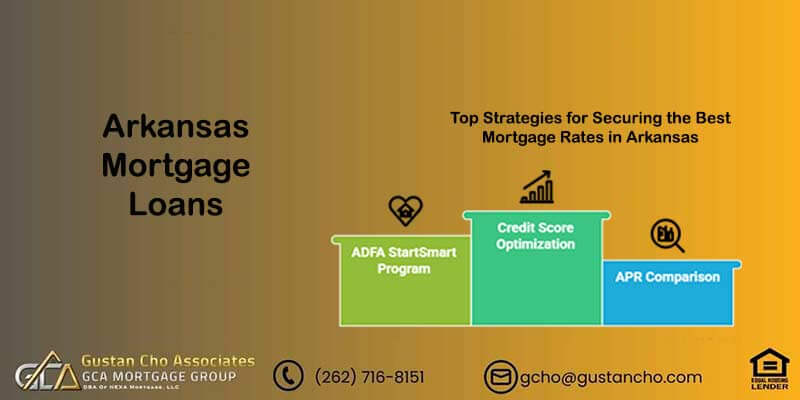
Getting the Best Rate on a Home Loan in Arkansas
Want the best rates on Arkansas mortgage loans? Try these strategies:
Compare offers from multiple lenders.
- Improve your credit. Boost your credit by paying down debt and fixing errors on your credit report.
- Securing a great interest rate and exploring government-backed loans can lead to big savings for Arkansas homebuyers.
Frequently Asked Questions Buying A House In Arkansas And Mortgage OptionsIn Arkansas, How High Does Your Credit Score Need To Be To Get an FHA Loan?
- To qualify for 3.5% down, you need a score of 580. If you have a score of 500—579, you need to put down 10%.
Can I Get A Loan To Buy A Home In Arkansas With No Down Payment?
- You can use VA or USDA loans.
- VA and USDA loans allow eligible borrowers to finance the entire purchase price.
Are There Any Programs In Arkansas That Help With Closing Costs?
- Yes.
- The ADFA provides assistance with closing costs and down payments throughout the state.
Do Non-QM loans report to the credit bureaus?
- Many Non-QM lenders report payment history, which can help either build or boost your credit.
Are Self-Employed Individuals Eligible for a Mortgage in Arkansas?
- Yes, self-employed individuals can qualify using a bank statement or Non-QM programs.
- Arkansas offers a wealth of mortgage options for first-time buyers and those with credit hurdles.
- With choices like Non-QM, USDA, and FHA loans, homeownership is within reach.
- Local experts are eager to help you secure the best loan and maximize your investment.
MORTGAGE LENDERS FOR BAD CREDIT IN ARKANSAS:
https://gcamortgage.com/arkansas-mortgage-loans/
-
This discussion was modified 1 month, 2 weeks ago by
 Sapna Sharma.
-
This discussion was modified 1 month, 2 weeks ago by Sapna Sharma.
gcamortgage.com
Looking for Arkansas mortgage loans? Explore your options for FHA, VA, USDA, Conventional, Non-QM, and Jumbo loans and DPA.
-
Moving to a new state and buying a house can be an exciting, but complex process. Here are some tips to help you navigate it.
1. **Research**: Understand the living conditions, crime rate, quality of education, weather, healthcare facilities, local culture, job market, and cost of living in different parts of Arkansas.
2. **Choose the Right Location**: Arkansas is known for its diverse landscapes, ranging from mountainous regions to lowlands along the Mississippi River. Key cities include Little Rock (the capital), Fayetteville, Fort Smith, and Jonesboro, each with its own unique character and community. Rural vs. urban, proximity to amenities, and commute times may all influence your decision.
3. **Understand the Local Real Estate Market**: The cost of housing in Arkansas is relatively affordable compared to the national average, but prices can vary based on the area. Consult a local real estate agent or do an online search to get a sense of prices in your preferred locations.
4. **Get Pre-approved for a Mortgage**: Before you start looking for a house, get pre-approved for a mortgage. This will give you a clear idea of what you can afford and show sellers that you’re a serious buyer.
5. **Find a Reputable Real Estate Agent**: An agent can help you find homes within your budget and in your preferred location. They can also provide valuable insights about the local market, negotiate prices, and guide you through the closing process.
6. **Home Inspection**: Once you’ve found a house you like, arrange for a home inspection to identify any potential issues such as structural problems, electrical or plumbing issues, etc.
7. **Closing**: After your offer is accepted and your home inspection is completed, you’ll go through the closing process, which involves signing a lot of documents and, finally, getting the keys to your new home.
Remember, moving and buying a home is a major life event and it can be stressful. Be sure to plan ahead, budget for unexpected costs, and take your time to find the right home for you. Good luck!
Moving to a new state and buying a house can be an exciting, but complex process. Here are some tips to help you navigate it.
1. **Research**: Understand the living conditions, crime rate, quality of education, weather, healthcare facilities, local culture, job market, and cost of living in different parts of Arkansas.
2. **Choose the Right Location**: Arkansas is known for its diverse landscapes, ranging from mountainous regions to lowlands along the Mississippi River. Key cities include Little Rock (the capital), Fayetteville, Fort Smith, and Jonesboro, each with its own unique character and community. Rural vs. urban, proximity to amenities, and commute times may all influence your decision.
3. **Understand the Local Real Estate Market**: The cost of housing in Arkansas is relatively affordable compared to the national average, but prices can vary based on the area. Consult a local real estate agent or do an online search to get a sense of prices in your preferred locations.
4. **Get Pre-approved for a Mortgage**: Before you start looking for a house, get pre-approved for a mortgage. This will give you a clear idea of what you can afford and show sellers that you’re a serious buyer.
5. **Find a Reputable Real Estate Agent**: An agent can help you find homes within your budget and in your preferred location. They can also provide valuable insights about the local market, negotiate prices, and guide you through the closing process.
6. **Home Inspection**: Once you’ve found a house you like, arrange for a home inspection to identify any potential issues such as structural problems, electrical or plumbing issues, etc.
7. **Closing**: After your offer is accepted and your home inspection is completed, you’ll go through the closing process, which involves signing a lot of documents and, finally, getting the keys to your new home.
Remember, moving and buying a home is a major life event and it can be stressful. Be sure to plan ahead, budget for unexpected costs, and take your time to find the right home for you. Good luck!




You must be logged in to create new discussions.