
Sub Forums
 1 week, 6 days ago
-
All Discussions
-
In this thread of MLO Training e-Learning we will dive deeply into How to Qualify and Pre-Approve a Borrower and when to issue a pre-approval letter. One of the most common reasons for stress during the mortgage process and a last minute mortgage loan denial is because the MLO issued a pre-approval letter to a homebuyer without properly qualifying the borrower. We will cover the initial interview with the mortgage loan applicant, questions to ask applicants, important questions about their current job, years of employment, type of employment, type of earnings (hourly, salary, income, full or part-time, irregular income, bonus income, social security income, pension income, alimony and/or child-support, royalty income, W2 wage earner or 1099 wage earner, self-employment if applicable, co-borrower(s), non-occupant co-borrowers if applicable, and most importantly, How Much House Can I Afford vs How Much House Can I Qualify. We will dive deep into the applicant’s current credit scores, credit payment history, current liabilities, derogatory credit tradelines, such as outstanding collections, charge-off accounts, judgments, tax lien, bankruptcy, or housing event. We will also cover credit disputes, credit tradelines that is not reporting on credit reports that will get discovered via when a lender does a third-party national public records search such as delinquent federal student loans and other public records. We will cover the documents MLOs will request borrowers, the APPLY NOW link and how it works, and the Credit Report Link and how that works.
-
In this MLO Training Bootcamp e-Learning Sub-Forum, we will discuss on ways of developing a list of MLO Referral Partner Network. One way of marketing your loan origination business is through networking with other MLOs, realtors, attorneys, insurance agents, accountants, general contractors, and home builders.
MLO Training Bootcamp: MLO Referral Partner Network: How Can An MLO Become a Preferred Lender For a Home Builder? How Do You Get In The Door? What Is The Process of Becoming a Preferred Lender For a New Construction Builder? Do You Need To Pay For A Desk In Their Offices? Do They Want MLOs to Fully or Partially Pay Their Marketing Costs? After checking into preferred lenders of home builders, I have noticed that some preferred lenders are independent mortgage brokers and/or direct lenders. I have not run into any mortgage lenders that is owned or are wholly-owned subsidiaries of home builders. Is it politics to get in the door for builders? Many builders offer huge incentives for homebuyers who use the builder’s preferred lenders while other builders offer huger discounted mortgage rates and tens of thousands of dollars of upgrades if homebuyers use preferred lenders and do not offer buyers who use their own lenders.
One of the most common frequently asked questions by mortgage loan originators is how can a mortgage loan officer become a preferred lender for a home builder? It is no secret that new construction home builders aggressively push their homebuyers of new homes to the homebuilders preferred lender.
-
People who want to purchase a house will go through the homebuying and mortgage process. Every lender may have their own homebuying and mortgage process system. However, what I will cover on this sub-forum on How To Negotiate a Home Purchase Prior To Signing a Home Purchase Contract is a comprehensive step by step process where the buyer is protected and avoid stress and a last-minute cancellation of the home purchase due to one or more issues that could have been avoided.
Factors and Variables That Impact Negotiation of Home Purchase
If you do not have a real estate agent to represent you by the time you are pre-approved, I advise to interview several realtors. Loan officers, attorneys, family, friends, and business associates often can refer you to a real estate agent who they had a pleasant and rewarding experience with. You can also check online and reputable websites like Zillow, Realtor.com, Redfin, online communities, and social media platforms. Do your due diligence. Check their online customer reviews, years of experience, and definitely make sure the realtor is a full time experienced agent who is from the area you intend to look for a home.
The method the buyer’s realtor advise you on negotiating a home purchase is dependent on the housing market. Is it a buyer’s market or sellers market? How is the housing inventory vs demand? What is the market time of an average home? Are you going to encounter many other potential buyers where it may lead to a bidding war? In a competitive market, homebuyers often face stiff competition where multiple buyers enter offers above the list price. We can cover more on this topic in this sub-forum and other sub-forums of GCA Forums e-Learning MLO Training Bootcamp.
Once a pre-approval letter is obtained, assist both the borrower and the realtor during the negotiation of the offer. The following is a step-by-step guide for the home-buying process.
Key Elements of the Negotiation ProcessContingencies
Contingencies allow buyers to cancel the purchase agreement without penalty if specified conditions are not satisfied.
Financing Contingency:
- If the buyer’s loan is not approved, the agreement may be canceled.
- This contingency typically addresses loan details and establishes a time frame.
Inspection Contingency:
- Buyers are generally allotted 7 to 14 days to inspect the property.
- If issues are identified, they may request repairs or a price reduction.
Appraisal Contingency:
- If the appraised value of the home is less than the agreed-upon price, buyers may renegotiate the terms or withdraw from the agreement.
Title Contingency:
- This provision ensures that the property’s title is clear and free of liens or disputes.
Sale Contingency:
- Applicable when the buyer must sell their current home before purchasing; such offers are typically less competitive.
Seller Concessions:
- Concessions are instances in which the seller agrees to cover specific costs or fulfill certain contractual terms.
Maximum Seller Concession Allowed Per Loan Program:
- HUD allows up to 6% seller concessions towards closing costs on FHA Loans.
- The Department of Veterans Affairs allows up to 4% seller concessions towards closing costs on VA Loans.
- USDA Loans allows up to 6% seller concessions towards closing costs on USDA Loans.
- Fannie Mae and Freddie Mac allows up to 6% seller concessions on primary owner-occupant homes and second homes and up to 2% seller concessions on investment properties.
- Seller concessions on Non-QM Loans, Jumbo Loans, and Portfolio loans depends on the individual mortgage lender (Some lenders allow 2% while others allow up to 6%).
Homebuyers can use seller concessions to cover closing costs and pre-paids. However, closing costs cannot be used for down payment on a home purchase. Overages on closing costs cannot be paid to borrowers. Overages of closing costs goes bsck to the home seller. In the event of overages of seller concessions, loan officers will use it towards buying the rate. If the borrower gets seller concessions for closing costs but falls short, the lender can offer lender credit to pay the shortage of closing costs. Below are informative guides on this subject matter. If you have any questions, please reply on the comment section below this post:
- Lender Credit and Seller Concessions: https://gustancho.com/lender-credit-and-sellers-concessions/
- Interest Rate Buy Downs: https://gustancho.com/interest-rate-buydowns/
- VA Guidelines on Seller Concessions: https://gustancho.com/va-guidelines-on-seller-concessions/
- Steps To Buying a House During a Bullish Sellers Market: https://gustancho.com/steps-to-buying-your-first-home/
Closing Costs:
- Sellers may contribute 2 to 6% of the purchase price toward the buyer’s closing costs, and occasionally more.
- Sellers can also pay points to reduce the buyer’s interest rate, either for the duration of the loan or for a specified period, utilizing options such as a 2-1 or 3-2-1 buydown.
Home Warranty:
- The seller may provide a one-year home warranty that covers major systems.
- Alternatively, rather than completing repairs, the seller may credit the estimated repair costs on the closing statement.
Earnest Money:This deposit typically ranges from 1 to 3% of the sale price, although the amount may vary based on the property.When Earnest Money is Refundable:
- Set clear rules for refunds, usually if contingencies are not met.
- After contingencies are waived, the money is no longer refundable.
Who Holds the Money:
- Decide who will hold the earnest money.
- Deal Terms: If the transaction does not proceed, ensure that the refund conditions for the earnest money are clearly defined.
- Earnest money is clear.
Strategic Approaches to NegotiationMarket Knowledge:
- Determine a fair sales price by analyzing recent transactions, prevailing market trends, and comparable property values.
Offer Terms:
- In addition to price, evaluate other terms that may be attractive to the seller, such as the closing date or proposed contingencies.
Protections vs. Offers:
- In a competitive market, it is important to balance the appeal of the offer with adequate buyer protections.
- When multiple buyers are expected, develop a clear negotiation strategy.
- Review each negotiation point, its impact on lending, implications for affordability, and its significance prior to finalizing the offer.
Maximum Seller Concession Allowed Per Loan Program:
- HUD allows up to 6% seller concessions towards closing costs on FHA Loans.
- The Department of Veterans Affairs allows up to 4% seller concessions towards closing costs on VA Loans.
- USDA Loans allows up to 6% seller concessions towards closing costs on USDA Loans.
- Fannie Mae and Freddie Mac allows up to 6% seller concessions on primary owner-occupant homes and second homes and up to 2% seller concessions on investment properties.
- Seller concessions on Non-QM Loans, Jumbo Loans, and Portfolio loans depends on the individual mortgage lender (Some lenders allow 2% while others allow up to 6%).
Homebuyers can use seller concessions to cover closing costs and pre-paids. However, closing costs cannot be used for down payment on a home purchase. Overages on closing costs cannot be paid to borrowers. Overages of closing costs goes bsck to the home seller. In the event of overages of seller concessions, loan officers will use it towards buying the rate. If the borrower gets seller concessions for closing costs but falls short, the lender can offer lender credit to pay the shortage of closing costs. Below are informative guides on this subject matter. If you have any questions, please reply on the comment section below this post:
- Lender Credit and Seller Concessions: https://gustancho.com/lender-credit-and-sellers-concessions/
- Interest Rate Buy Downs: https://gustancho.com/interest-rate-buydowns/
- VA Guidelines on Seller Concessions: https://gustancho.com/va-guidelines-on-seller-concessions/
- Steps To Buying a House During a Bullish Sellers Market: https://gustancho.com/steps-to-buying-your-first-home/
Closing Costs:
- Sellers may contribute 2 to 6% of the purchase price toward the buyer’s closing costs, and occasionally more.
- Sellers can also pay points to reduce the buyer’s interest rate, either for the duration of the loan or for a specified period, utilizing options such as a 2-1 or 3-2-1 buydown.
Home Warranty:
- The seller may provide a one-year home warranty that covers major systems.
- Alternatively, rather than completing repairs, the seller may credit the estimated repair costs on the closing statement.
Earnest Money:This deposit typically ranges from 1 to 3% of the sale price, although the amount may vary based on the property.When Earnest Money is Refundable:
- Set clear rules for refunds, usually if contingencies are not met.
- After contingencies are waived, the money is no longer refundable.
Who Holds the Money:
- Decide who will hold the earnest money.
- Deal Terms: If the transaction does not proceed, ensure that the refund conditions for the earnest money are clearly defined.
- Earnest money is clear.
Strategic Approaches to NegotiationMarket Knowledge:
- Determine a fair sales price by analyzing recent transactions, prevailing market trends, and comparable property values.
Offer Terms:
- In addition to price, evaluate other terms that may be attractive to the seller, such as the closing date or proposed contingencies.
Protections vs. Offers:
- In a competitive market, it is important to balance the appeal of the offer with adequate buyer protections.
- When multiple buyers are expected, develop a clear negotiation strategy.
- Review each negotiation point, its impact on lending, implications for affordability, and its significance prior to finalizing the offer.
https://gustancho.com/how-to-negotiate-a-home-purchase/
https://www.youtube.com/watch?v=PsvUnD3tuL0
gustancho.com
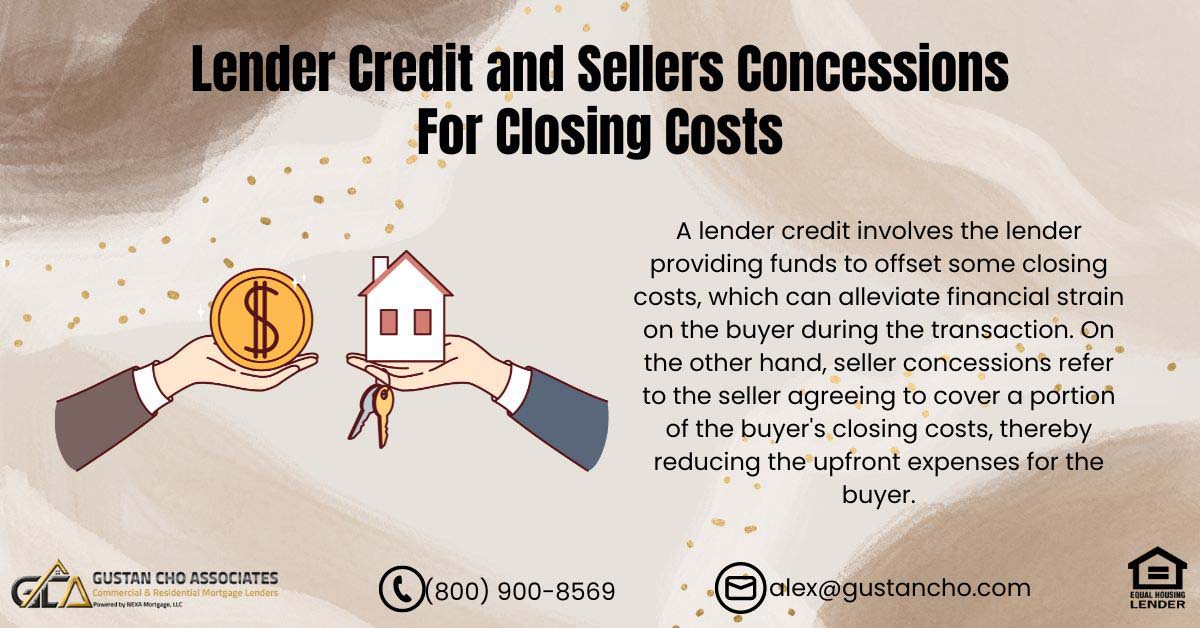
Lender Credit and Sellers Concessions For Closing Costs
Lender Credit and Sellers Concessions can be used for closing costs on but cannot be used for down payment on home purchase.
-
I will contact Alan Bercovitz, President of the Complete 1003 Software, LLC. Its been couple of years since I talked to him. Alan’s software is a great learning tool plus a system that can keep mortgage loan originators a piece of mind with an already established system. I want to know more about The Complete 1003 Software, whether or not the software has been updated, and whether Alan implemented AI to his systems. Based on publicly available information, The Complete 1003 Software LLC is an MLO training and loan-structuring education platform developed by Alan Bercovitz. It is dedicated to enhancing loan officers’ ability to ask pertinent questions, structure loans effectively, and reduce underwriting fallout.
What Is The Complete 1003 Software?The Complete 1003 Software functions as more than a mortgage application solution; it serves as an educational and decision-support system for mortgage loan originators.
Alan Bercovitz characterizes the system as a sequence of ‘if-then’ questions. The application systematically guides loan officers through initial and follow-up questions, relevant guidelines, and areas subject to underwriter discretion.
The primary objective of the solution is to enable loan officers to approach underwriting more deliberately at origination. The system guides MLOs in identifying essential questions prior to file submission, thereby reducing borrower frustration caused by prolonged underwriting processes.
Who Is Alan Bercovitz?
Alan Bercovitz is the creator of The Complete 1003 Software. His public biography indicates that he has worked in lending since 1979 and has worked exclusively in the residential mortgage sector since 1990. His biography also mentions he was the long-time president of the Rhode Island Financial Services Association, a long-time board member of the New England Financial Services Association, a member of the MBA, and he holds the U.S. Mortgage Business Method Patent No. 7,788,148.
What Problem Does The Complete 1003 Try To Solve?
A common issue is that many loan officers submit incomplete or low-quality applications, often incentivized by bonuses for timely submission. Alan Bercovitz has observed that many underwriting issues are not identified at the time of application but instead emerge two to three weeks later during processing. Mortgage companies often allow incomplete files to progress, leaving underwriters responsible for identifying and addressing these issues.
The Complete 1003 Software addresses this challenge by assisting MLOs in identifying issues such as:
- Income issues
- Credit issues
- Open items on tax returns
- Alimony and child support issues
- Details related to self-employment
- Guideline exceptions
- Areas of borrower qualifications that are insufficient
- Red flags related to property or HOA
- Missing items that may be asked outside of the 1003
Relevance for Loan Officer Training
Within the context of GCA Forums and the Loan Officer Training eLearning Center, the software’s design is well-suited as it emphasizes practical mortgage origination skills rather than solely textbook licensing content.
It is entirely possible for new ML. Newly certified MLOs may lack the practical skills required to accurately structure mortgage applications.
The Complete 1003 Software addresses this gap by integrating the entire application process, including essential follow-up questions, risk recognition, and understanding underwriter discretion.licensed MLOs
- Loan officers transitioning from call center jobs to broker/correspondent lending.
- Processors need to understand the file structure.
- Branch managers who have to train new employees
- LO assistants who need to understand pre-screening
- Mortgage companies are trying to minimize fallout.
- Teams that deal with FHA, VA, USDA, conventional, and non-QM loans
The 1003 Mortgage Application and Its Importance
The standard 1003 mortgage application gathers borrower data, but it doesn’t ensure that loan officers ask every required underwriting question.
The Complete 1003 concept extends beyond the standard form by incorporating real-world questions that experienced mortgage professionals would consider prior to issuing a robust pre-approval.
According to a press release from 2013, Alan Bercovitz’s Guaranteed Mortgage Quote system indicates that The Complete 1003 is a supplemental application that adds additional mortgage-related questions that may not be included in the standard 1003, along with Fannie Mae, Freddie Mac, FHA, and USDA/FHA (FHA guaranteed loans) guidelines relating to the questions.
Best Way To Describe It On GCA Forums
As such, you can describe it as follows:
The Complete 1003 Software is a tool used for training mortgage loan officers and structuring educational software developed by Alan Bercovitz. The software allows MLOs to ask better borrower questions, detect friction in underwriting more quickly, and understand agency guidelines, all while creating a more comprehensive and clear mortgage file for processing and underwriting.
Suggested GCA Forums Directory Description
The following version highlights the organization’s educational mission:
- The Complete 1003 Software LLC is a software and educational training tool developed by Alan Bercovitz, a veteran of the mortgage industry.
- It is designed to bring underwriting understanding to the point of loan origination for mortgage loan officers.
- The tool enables MLOs to better understand questions, comprehend guideline issues, detect potential underwriting problems more quickly, and structure more comprehensive mortgage applications before the file is sent to processing or underwriting.
- This answer-based training is excellent for new loan officers, branch managers, and mortgage firms that seek to control loan fallout.
Recommendation
The Complete 1003 Software is a strong candidate for inclusion in the GCA Forums eLearning Center, as it emphasizes practical skills for real-world mortgage origination and underwriting. The platform supports comprehensive loan officer training, case studies, and scenario-based learning.
The Complete 1003 Software works on the missing component of:
- Taking a loan application
- Submitting a clean, underwritable mortgage.
- Many new MLOs encounter challenges during this stage of the process.cess.
https://gcaforums.com/business/the-complete-1003-software-llc/
-
This discussion was modified 1 month, 4 weeks ago by
 Gustan Cho.
-
Welcome to GCA Forums MLO Training Bootcamp, sponsored by GCA Forums eLearning.
GCA Forums eLearning MLO Bootcamp Statement
GCA Forums Loan Officer Training Bootcamp Online Course aims to be among the most comprehensive and practical mortgage loan originator training programs available. It provides students with a thorough understanding of the mortgage process, from initial borrower contact to final closing. GCA Forums eLearning Center MLO Training Bootcamp is intended for individuals seeking practical knowledge beyond theoretical concepts.
GCA Forums eLearning MLO Training Bootcamp is designed for students who wish to understand authentic mortgage files, borrower challenges, underwriting conditions, credit issues, income calculations, and effective solutions.
For new loan officers, this course serves as a foundation for developing confidence and competence. Experienced loan officers may utilize it as an advanced training resource and discussion platform. Processors, real estate agents, and other mortgage professionals can gain a deeper understanding of the mortgage approval process.
GCA Forums Loan Officer eLearning MLO Training Bootcamp will give students the tools, structure, case studies, and community support needed to become stronger, smarter, and more effective mortgage professionals.
MLO Training Course Description For GCA Forums
GCA Forums Loan Officer Training Bootcamp Online Course, powered by Gustan Cho Associates, is a comprehensive online mortgage loan originator training program designed to teach new and growing loan officers how to originate mortgage loans from start to finish.
GCA Forums eLearning MLO Bootcamp online course covers borrower qualification, credit report analysis, income calculation, DTI review, loan program selection, automated underwriting, pre-approval letters, purchase contracts, loan estimates, processing, underwriting, conditions, clear-to-close, closing disclosures, title company coordination, and final closing.
Students will also study real-life mortgage case scenarios involving FHA, VA, USDA, conventional, jumbo, non-QM, DSCR, bank statement loans, self-employed borrowers, high DTI borrowers, credit-challenged borrowers, bankruptcy, foreclosure, collections, charge-offs, late payments, credit disputes, and manual underwriting.
Unlike basic online mortgage training courses, the GCA Forums Mortgage Loan Officer Training Bootcamp Online Course is built around real-world mortgage files, live discussions, student questions, instructor feedback, and practical loan officer problem-solving.
Students can participate in discussion threads, ask questions, reply to posts, review case studies, share tips, and learn from Gustan Cho and mortgage industry experts from across the country.
GCA Forums eLearning: MLO Training ThreadsGCA Forums MLO Training Threads, and Topics
Students Who Are Members of GCA Forums eLearning Center Enrolled In MLO Training Bootcamp Are Encouraged To Participate In All Discussions. Students Can Post, Reply, and Answer In Discussions. Below Are Categories of MLO Training Sub-Forums That Will Be Thoroughly Covered and Discussed. GCA Forums MLO Training Bootcamp Content On Sub-Forums Includes Text, Open Discussions, Popular Blogs and Guides, Videos, and Live Podcasts. Members With Questions Or Need To Contact GCA Forums eLearning Center Can Email support@gcaforums.com.
- Welcome To Loan Officer Training Bootcamp, Powered By eLearning of GCA Forums
- Mortgage Loan Officer Basics
- Mortgage Broker vs Mortgage Lender
- How Lender Price Rates: Loan-Level Pricing Adjustments
- Credit Report Training
- Credit Repair And Credit Optimization
- Income Calculation Training
- Debt-To-Income Ratio Training
- Assets, Bank Statements, And Funds To Close
- FHA Loan Training
- VA Loan Training
- USDA Loan Training
- Conventional Loan Training
- Non-QM Loan Training
- DSCR And Investor Loan Training
- Automated Underwriting System Training
- Pre-Approval Letter Training
- Loan Estimate And Disclosure Training
- Mortgage Processing Training
- Underwriting And Conditions Training
- Clear To Close And Closing Training
- Real-Life Case Studies
- Ask The Instructor
- Student Questions And Answers
- Loan Officer Tips And Best Practices
- Weekly Mortgage Training Discussions
- Advanced Loan Officer Masterclass
https://gustancho.com/training-a-new-mortgage-loan-officer/
gustancho.com
Training a New Mortgage Loan Officer Without Any Experience
Gustan Cho Associates are experts in training a new mortgage loan officer without any experience through its mentor new MLO academy.
-
Consumer Direct Mortgage Division: How It Works and Why It Matters
Every mortgage loan originator has their own way of doing business. MLOs can set up a brick and mortar store front location with a large signage where they rely on foot traffic and limit their marketing to a particular area, town, city, county, or state. Other loan officers may get licensed in a limited number of state. Loan officers may network with realtors, attorneys, insurance agents, and other third-party professionals, and last but not least, some mortgage loan originators target a national consumer base and are licensed in all 50 states and use the consumer direct mortgage division model
In this thread, you will learn how a consumer direct mortgage division works, from online leads and MLOs to processors, LOAs, compliance, and borrower support.
Overview of iServe Consumer Direct Mortgage ServicesExplanation of the Components of iServe Consumer Direct Mortgage Services
A company creates a consumer-direct mortgage service when it lets borrowers work directly with them, instead of going through agents, builders, banks, or outside referrals, to complete the mortgage process.
This setup relies on online marketing, strong website traffic, a call center, an organized lead management system, licensed mortgage loan originators, and a solid operations team.
The Main Goal Is Straightforward:Help More Borrowers Get Approved Faster
A consumer direct division is designed to manage a large number of borrower inquiries, pre-approvals, applications, document collection, loan condition processing, and loan closing efficiently and in an organized manner.
This kind of division works best when each team member has clear responsibilities.
Importance of Consumer Direct Mortgage Lending
With consumer direct lending, borrowers can talk directly to mortgage specialists. This removes unnecessary delays, so specialists can review credit, income, loan options, and answer questions more quickly.
Most people shopping for home loans online are not yet ready to work with real estate agents. They often have questions like:
- Can I qualify with bad credit?
- Can I buy a home after bankruptcy or foreclosure?
- Can I qualify with high debt-to-income ratios?
- Can I get approved after being denied by another lender?
- Do I need to repair my credit before I apply?
- Which loan program is best for me?
- How much of a home can I afford?
- What is required to get me pre-approved?
Building an effective consumer-direct division enables you to answer these questions early in the process, guiding the borrower from the first conversation to the final closed loan.
Case Study of Gustan Cho Associates’ Consumer Direct Model
Gustan Cho Associates set up a consumer direct division much like this one. Their model captured online borrower inquiries, matched them with skilled mortgage professionals, supported licensed loan officers as needed, and established a clear process to help borrowers move from pre-approval to closing.
With this approach, Gustan Cho Associates provided borrowers with strong, comprehensive support throughout the process.
This setup works best when combined with targeted website traffic, good teamwork, careful processing, and clear, organized communication.
The Foundations of a Consumer Direct DivisionGenerating Online Traffic
- The first key part of a consumer direct division is attracting borrower traffic.
- Most consumer direct divisions rely on various methods for:
Lead Sources
- Organic traffic
- Search engine referrals
- Mortgage articles
- Online forums
- Social media
- Advertising
- Follow-up referrals
- Former client listings
- Calculators
- Videos
- Pre-approvals
More website traffic usually means better. To keep loan officers, processors, and operations staff busy, a consumer direct division needs a steady stream of borrower inquiries.
Licensed Mortgage Loan Originators
- Licensed Mortgage Loan Originators (MLOs) meet directly with borrowers.
- They handle loans from start to finish, review each borrower’s finances, explain loan options, and provide pre-approvals.
Main MLO Responsibilities
A Mortgage Loan Originator may do the following:
- Review the borrower’s financials.
- Provide credit
- Provide borrower income
- Provide analysis of borrower debt and income.
- Discuss available loan products with the borrower.
- Provide the borrower with a pre-approval letter.
- Discuss the borrower’s loan options, rates, and payments.
- Provide the borrower with loan application instructions.
- Follow up with borrowers and referral sources.
- Prepare the file for submission to processing.
Because there are so many borrower inquiries, MLOs in a consumer direct division need a lot of support.
Processor and Loan Officer Assistant Support
The best way to grow a consumer-direct division is to use trained Processor/Loan Officer Assistants (Processor/LOAs).
Rather than hiring many licensed loan officers, a company can build a support system in which each MLO has a team of specialized assistants. Processor/LOAs
Processor/LOAs assist in the following activities:
- Document collection from borrowers
- File organization
- Follow-ups for missing items
- Document preparation for the processing unit
- Completion of applications by borrowers
- Document uploads
- Loan condition tracking
- Interaction with processors
- Assisting in pipeline management
- Daily file flow management for MLOs
This setup lets licensed MLOs spend more time on borrower strategy, loan structure, pre-approvals, and other important tasks.
Importance of Mortgage Processors
- A consumer-direct division’s success depends heavily on its team of mortgage processors.
- They help move each file smoothly from submission to underwriting, through conditional approval, and finally to closing and settlement.
Responsibilities of a Processor
Mortgage processors may manage:
- Reviewing and approving borrower documentation
- Finalizing documents for underwriting
- Placing verification requests
- Liaising with borrowers
- Addressing conditions set by underwriters
- Interfacing with title, insurance, and other third-party services
- Supervising time limits
- Ensuring that the file is brought to a clear to close status
With a strong processor, files get added to the closing list quickly. Weak processors, on the other hand, can cause delays.
Operations Leadership
- Strong operations leadership is essential in a consumer-direct division.
- This leader manages the division’s daily activities, making sure loan officers, processors, assistants, and marketing staff all work together as a team.
Tasks for Operations Leaders in a Consumer Division
- Have control of the pipeline.
- Allocate files.
- Bring the status of loans up to date.
- Develop and assist your team.
- Supervise outcomes and resolve challenges.
- Recruit your own teams on a need basis.
- Advocate for improved systems and processes.
- Create a culture of accountability.
- Onboard new and temporary staff on systems and processes.
- Assist your team in achieving their goals and realizing their potential.
Training and Career Progression
A strong consumer-direct division offers plenty of opportunities for career growth.
Most staff start in support roles and gradually move into larger positions.
Steps to Advancement
An individual can develop from:
- An assistant to a junior processor.
- A junior processor to a full processor.
- A full processor to a processing manager.
- A loan officer assistant to a licensed MLO.
- An MLO to a team leader.
- A team leader to a division director.
- An operations assistant to an executive operations manager.
Importance of Processors and LOAs
Without sufficient support from processors and LOAs, a consumer-direct mortgage division can grow more quickly.
Here’s why:
Licensed MLOs Need to Create
MLOs shouldn’t have to spend time chasing files, checking conditions, or handling numerous administrative tasks. That’s why Processor/LOAs are so important.
This can result in:
- More consultation opportunities for borrowers
- Faster responses
- Improved file management
- Increased closing ratios
- Enhanced borrower satisfaction
- Greater consistency in production
- Improved control over the pipeline
Compensation in the Consumer Direct Division
Compensation depends on the company, the state, licensing requirements, the structure of employment, and whether the loan is self-generated or provided by the company.
A consumer direct division may include compensation for:
Standard Compensation Areas
- Commission for licensed MLOs
- Processor per-file compensation
- Compensation for loan officer assistants
- Management fees
- Team bonuses
- Discretionary bonuses
- Residual or override income
- Draw against commission
- Salary with a bonus
- Arrangements as a W2 or 1099 in compliance with the law
All compensation agreements should be put in writing and properly documented.
Importance of Compliance and Licensing
Because mortgage lending is complex and highly regulated, consumer-direct mortgage divisions must be carefully set up.
Each role must adhere to federal, state, and company laws, regulations, and licensing requirements.
Key Considerations for Compliance
For a consumer direct division, the following should be considered:
- State licensing demands
- MLO licensing demands
- Licensing of processors
- Borrower-paid processing fees
- Compliance with RESPA
- Advertising disclosures
- Compliance with the compensation plan
- W2 and 1099 classification
- Written contracts for employment or as a contractor
- Clear definitions of roles
Growth is important, but compliance always comes first.
Importance of the Pipeline
- A healthy pipeline is essential for growing a consumer-direct division.
- The pipeline refers to how borrowers move through each stage of the mortgage process.
Pipeline PhasesA borrower may go through:
- Online inquiry
- Initial contact
- Application in progress
- Document requests
- Review of pre-approval
- Structuring of the loan
- Contracted property
- Submission of the file for processing
- Submission of the file to underwriting
- Approval with conditions
- Clearance to close
- Finalization of the loan
- Follow up after the loan is finalized
It’s easier to manage these phases when you have good systems in place.
Importance of Website Traffic
- Website traffic is very important for the Consumer Direct Division.
- Many people go online to find answers to their mortgage questions.
- Some examples of search topics include:
Common Queries of Consumers Direct
- Bad credit and FHA loans
- Bankruptcy and VA loans
- Foreclosure and mortgages
- Loans with Non-QM
- Loans with bank statements
- DSCR loans
- High DTI mortgage options
- Loans with manual underwriting
- Mortgages for low credit scores
- First-time Homebuyer programs
- Mortgages after loan denial
The more helpful the website, the more likely borrowers are to reach out.
The Need for Seamless Interdepartmental Collaboration
A consumer direct division does more than just handle sales.
It’s also essential for marketing, technology, compliance, and operations teams to work closely together.Key Support Areas
An effective division might require:
- SEO writers
- Website developers
- Social media team
- Video editors
- Forum moderators
- CRM managers
- Intake specialists
- Processors
- Loan officer assistants
- Compliance staff
- Training managers
- Executive operations support
When marketing brings in new leads and operations supports them well, the division can really grow.
The Long-Term Goal
The goal of a consumer direct mortgage division is to build a strong system that helps borrowers every step of the way, from education and pre-approval to underwriting and closing.
A Strong Consumer Direct Division Should Provide
- Quick replies to borrowers
- Simple, clear loan options
- Strong file structure
- Knowledgeable file processing
- Constant follow-up
- Operations with a focus on compliance
- Team support that grows with the division
- Opportunities for team members to grow their careers
- Enhanced experience for the borrower
Final Thoughts
When set up correctly, a consumer-direct mortgage division can become one of the most successful parts of a mortgage company.
The best model does more than just generate leads. It creates an integrated system that benefits both borrowers and the mortgage team.
A successful consumer direct division needs:
The Right Foundation
- High online traffic volume
- Licensed MLOs
- Adept processors
- Trained Processor/LOAs
- Ops leadership
- Marketing inclusion
- Defined compensation structure
- Compliance control
- Continuous training
- Promotion pathways
When all these pieces come together, a consumer direct mortgage division can serve more borrowers, boost volume, create jobs, and help build long-term careers in mortgage lending.
https://www.youtube.com/watch?v=f-25kW2EKFw
-
This discussion was modified 2 months ago by
 Lori.
Lori.




You must be logged in to create new discussions.