
 Attorney
 Tom Miller
AttorneyForum Replies Created
-

For USDA Section 502 Guaranteed Loans, here is the current agency-level answer. The biggest distinctions are that USDA itself has no published minimum credit score, the standard ratios are 29% housing / 41% total debt, and USDA can permit an active Chapter 13 repayment plan under specific conditions. Individual lenders can still impose overlays. USDA says the program is for eligible borrowers purchasing a primary residence in an eligible rural area and can provide 100% financing.
1. Minimum Credit Score
USDA does not establish a universal minimum credit score for the Section 502 Guaranteed Loan Program. USDA’s current program page specifically says there is no credit-score requirement, although the borrower must demonstrate willingness and ability to manage debt.
This is different from saying that every USDA lender will approve any credit score. Lenders may establish overlays, and GUS evaluates the entire credit profile.
For GUS Refer, Refer with Caution, and manually underwritten loans, USDA requires credit-score validation. At least one applicant whose income and/or assets are used must have a validated credit score, generally supported by two eligible tradelines with at least 12 months of history. Nontraditional credit can sometimes be used when traditional credit is insufficient.
Bottom line: There is no USDA agency minimum such as 580, 600, 620, or 640. A lender advertising a minimum score is generally imposing its own requirement or investor overlay rather than quoting a universal USDA minimum.
2. Maximum Debt-to-Income Ratio
USDA’s standard qualifying ratios are:
- 29% front-end housing ratio
- 41% back-end total debt ratio
USDA defines the housing expense as including the mortgage payment and applicable taxes, insurance, mortgage insurance/annual fee, association dues, subordinate financing, and similar housing obligations.
However, 41% is not an absolute maximum in every case. USDA permits flexibility when appropriate compensating factors exist, and a GUS Accept can support ratios beyond the standard benchmark depending on the overall file.
This is why it is better to describe 29/41 as USDA’s standard ratios, rather than saying USDA has an absolute 41% maximum DTI.
3. USDA Manual Underwriting Guidelines
USDA permits manual underwriting.
Manual underwriting becomes substantially more credit-history driven because the underwriter must independently determine that the borrower represents an acceptable credit risk.
For manually underwritten loans, USDA requires credit-score validation. Significant derogatory credit must be evaluated and documented. USDA regulations specifically identify events such as a recent foreclosure, recent bankruptcy discharge, and a 30-day housing late within the preceding 12 months as significant derogatory credit.
A borrower who doesn’t have sufficient traditional credit may potentially establish an acceptable nontraditional credit history under USDA requirements.
Manual underwriting should therefore not be viewed simply as a way around a GUS Refer. The lender must document why the borrower is an acceptable credit risk.
4. Credit Disputes, Collections and Charge-Offs
Collections: USDA does not automatically require every collection to be paid. Medical collections do not have to be paid solely because they are medical collections.
When total non-medical collections exceed $2,000, USDA provides three basic approaches: pay them in full before closing; establish/use a documented repayment agreement and count its monthly payment; or generally count 5% of the outstanding collection balance as a monthly liability.
Charge-offs: USDA does not require charge-offs to be paid as a general agency requirement. The underwriter must still determine that the borrower represents an acceptable credit risk. If the borrower has a repayment agreement on a charged-off account, its payment must be included appropriately.
Credit disputes: USDA requires lenders to evaluate disputed accounts. Particularly important are non-medical collections and accounts showing late payments during the preceding 24 months. Certain disputes receive different treatment, including medical collections, charged-off accounts, documented identity-theft accounts, and certain accounts belonging to a non-purchasing spouse.
A dispute can also cause a GUS Accept to require a downgrade unless the account falls within one of USDA’s permitted exceptions.
5. Late Payments During the Past 12 Months
This requires an important distinction between housing late payments and other late payments.
USDA specifically considers one rent or mortgage payment that was 30 days or more delinquent during the previous 12 months to be significant derogatory credit. The lender must verify housing payments made during the preceding 12 months.
That does not mean every isolated 30-day late on every type of consumer account automatically makes the borrower ineligible.
Recent late payments still need to be evaluated as part of the borrower’s overall credit history, especially on a manually underwritten loan. USDA allows credit exceptions for qualifying extenuating circumstances when appropriately documented.
6. Non-Occupant Co-Borrowers
USDA does not work like FHA when it comes to non-occupant co-borrowers.
USDA’s program requires applicants to personally occupy the property as their primary residence.
Therefore, you generally cannot add a parent, relative, friend, or other person who will not occupy the property simply to contribute additional qualifying income in the manner commonly permitted on an FHA transaction.
For a USDA Guaranteed Loan, the qualifying applicants are expected to occupy the subject property as their primary residence.
7. Waiting Period After Bankruptcy or a Housing Event
The important USDA benchmark is generally 36 months for significant derogatory events.
For Chapter 7 bankruptcy, a discharge more than 36 months before USDA submission is no longer treated as adverse credit under the applicable guideline. A Chapter 7 discharged within 36 months is significant derogatory credit for Refer/Refer with Caution/manual underwriting and generally requires a credit exception. A GUS Accept can potentially be obtained with a bankruptcy discharged less than 36 months ago without the same credit-exception requirement.
For foreclosure, deed-in-lieu, and short sale, 36 months is likewise the important benchmark. With Refer/Refer with Caution/manual underwriting, an event inside 36 months generally requires a credit exception.
Therefore, avoid stating simply that “USDA requires a three-year waiting period.” GUS results and credit exceptions matter.
8. USDA During an Active Chapter 13 Bankruptcy Repayment Plan
Yes. USDA can permit a mortgage while the borrower remains in an active Chapter 13 bankruptcy.
For an active Chapter 11, 12, or 13 plan, USDA requires:
- Required bankruptcy payments to have been made on time.
- Written permission from the bankruptcy court/trustee to enter into the mortgage transaction, when the court/trustee issues such permissions.
- The bankruptcy-plan payment to be properly included in the application/GUS liabilities.
Here is an especially important distinction.
With a GUS Accept/Accept with Full Documentation, USDA says no credit exception is required, and entering the monthly bankruptcy payment does not itself require a downgrade.
For GUS Refer, Refer with Caution, and manually underwritten files, USDA requires documentation that 12 months of the debt-restructuring plan have elapsed.
Therefore, saying that every active Chapter 13 borrower must have made 12 months of payments is too broad. The USDA handbook distinguishes GUS Accept from Refer/manual underwriting.
9. USDA After Chapter 13 Dismissal or Discharge
USDA distinguishes a completed/discharged plan from a dismissed/incomplete bankruptcy.
For a completed/discharged Chapter 11, 12, or 13 plan:
GUS Accept/Accept with Full Documentation: No credit exception is required.
Refer/Refer with Caution/manual underwriting — completed 12+ months ago: No credit exception is required.
Refer/Refer with Caution/manual underwriting — completed less than 12 months ago: A credit exception is required.
A dismissal is different from a discharge. USDA says that when a bankruptcy has been dismissed or was not completed, the lender must evaluate the borrower’s overall credit profile and determine whether a credit exception is applicable.
That distinction is critical for mortgage qualification.
10. Voluntary vs. Involuntary Chapter 13 Dismissal
I would not publish a rule stating that USDA has separate fixed waiting periods for “voluntary dismissal” versus “involuntary dismissal.”
The current USDA credit matrix addresses a bankruptcy that is “dismissed, or not completed” and requires the lender to evaluate the overall credit profile to determine whether a credit exception is applicable. It does not establish two simple agency waiting-period tables based solely on whether the dismissal was voluntary or involuntary.
In practice, the reason for dismissal matters greatly to the credit-risk analysis.
For example, a Chapter 13 voluntarily dismissed after a documented change in circumstances and followed by clean credit may present a very different underwriting profile from a Chapter 13 involuntarily dismissed because the borrower repeatedly failed to make trustee payments.
But that is an underwriting/credit-exception analysis, not a separate USDA rule saying “X years for voluntary dismissal and Y years for involuntary dismissal.”
Key USDA Guidelines to Remember
The most important agency-level points are: no USDA-mandated minimum credit score; standard DTI of 29/41 with potential flexibility; manual underwriting is permitted; charge-offs generally do not have to be paid; non-medical collections over $2,000 receive special treatment; a 30-day housing late within 12 months is significant derogatory credit; non-occupant co-borrowers are not the FHA-style solution for USDA; and active Chapter 13 borrowers can potentially qualify.
For your GCA Mortgage Forums / GustanCho.com content, I would also emphasize throughout the article that these are USDA agency guidelines. A particular lender may impose stricter credit-score, DTI, bankruptcy, late-payment, or manual-underwriting requirements as lender overlays.
-
Tom Miller
MemberSeptember 12, 2026 at 3:53 am in reply to: Bankruptcy/chapter23 convert to chapter 7I agree with the attorney that the Chapter 13 payment is urgent. However, the explanations about the automatic stay and the Chapter 7 trustee’s role in selling a home could be easier to understand.
Several distinct issues need attention. The pressing matter of the Chapter 13 payment stands apart from the question of converting to Chapter 7.
The September 18 deadline is crucial. Missing it could trigger serious consequences.
If the Chapter 13 Trustee is missing $594.66 due to a wage-deduction mistake, pay this amount right away and keep your receipt. Missing a big payment under a confirmed Chapter 13 plan can quickly cause the case to be dismissed or changed.
Take care of this urgent payment before weighing any conversion or plan changes.
Converting to Chapter 7 does not, by itself, terminate the automatic stay.
One section of the attorney’s email could use more explanation.
The email states:
“You would lose the protection of the bankruptcy automatic stay.”
Changing from Chapter 13 to Chapter 7 does not automatically stop the automatic stay.
According to 11 U.S.C. § 348, conversion usually means that the same bankruptcy case continues under a different chapter rather than starting a new one.
The automatic stay usually remains in effect, unlike when a case is dismissed, when it typically ends. Still, switching to Chapter 7 does not fix the main mortgage problem.
Here, I agree with the attorney’s central concern.
Chapter 7 simply does not offer the same help for overdue mortgage payments that Chapter 13 provides.
One of the biggest benefits of Chapter 13 is that it lets you catch up on missed mortgage payments through a court-approved plan while still making your regular payments.
This valuable option disappears if you convert to Chapter 7.
Chapter 7 usually does not give homeowners extra time to catch up on missed mortgage payments, and a Chapter 7 discharge will not remove the mortgage claim on your home.
If the mortgage is very late and the homeowner cannot pay, get a loan change, or make another arrangement, the mortgage company may ask the court to end the automatic stay and begin collection under state law. Changing chapters does not automatically end the stay, but it can create serious risks for anyone trying to keep their home after missing several payments.
Clarifying the Requirement to Sell Homes with Equity
I want to clarify the statement from the email: “A Chapter Seven trustee is required to sell the house in order to unlock the unexempt equity.”
This statement is too broad. A Chapter 7 trustee’s job under 11 U.S.C. § 704 is to collect and sell property that is not protected from creditors if it helps pay them.
This does not mean that every property with some value is sold automatically.
The trustee must decide if there is real unprotected value after looking at factors like:
- The actual current property value
- The current mortgage payoff
- Other valid liens
- Bankruptcy exemptions
- Realtor commissions
- Transfer costs
- Taxes and other sales expenses
- Administrative expenses
- The amount that would actually remain for creditors
According to the United States Courts, if a debtor’s assets are protected or tied up by claims, a Chapter 7 trustee may find nothing to sell. Current property values are very important. A two-year-old market report is not enough.
The attorney mentioned that approximately two years ago, the property was estimated at around $285,000, and the mortgage claim was approximately $228,000.
Those numbers alone do not show whether Chapter 7 is a safe or risky choice right now. To really consider changing chapters, I would need:
- A realistic current market value for the property.
- A current mortgage payoff statement.
- A complete list of any other liens against the property.
- The exact exemptions claimed in the bankruptcy case.
- An estimate of reasonable selling expenses.
- A bankruptcy attorney’s estimate of the possible value that is not protected.
There is another key rule to consider here.
Under 11 U.S.C. § 348(f), special rules determine what constitutes property of the bankruptcy estate when a Chapter 13 case is converted to Chapter 7.
Section 348(f)(1)(B) also specifically provides that property valuations made during the Chapter 13 case do not simply carry over and control a converted Chapter 7 case.
Handling property value increases after filing is complicated, and courts often have different views. This makes it even clearer that a two-year-old market report is not enough to estimate what a Chapter 7 trustee might get.
This must be reviewed under the law that applies to the specific bankruptcy case.
I suggest considering changes to the Chapter 13 plan before thinking about converting.
Another option from the attorney’s email is changing the current Chapter 13 plan. Under § 1329, a confirmed Chapter 13 plan can be changed before it ends. Depending on the situation, this change could reduce the payment amount or extend the payment period, as permitted by bankruptcy law. If the household’s financial situation has changed significantly since the original plan, I would ask the bankruptcy attorney to review the current budget rather than assuming the old payment still works.
This requires preparing an accurate, up-to-date summary of:
- Gross monthly income
- Net monthly income
- Social Security or retirement income
- Mortgage payment
- Trustee payment
- Utilities
- Insurance
- Transportation
- Food
- Medical expenses
- Other necessary household expenses
If the household’s income has gone down, I would ask the attorney:
Can the confirmed Chapter 13 plan be adjusted to a payment amount the household can realistically afford while still complying with bankruptcy rules?
This question should be answered before making any big decisions, especially if you are worried the case might be dismissed.
Selling the home through Chapter 13 may also be an option.
If keeping the home is not possible, the attorney’s idea of selling during the Chapter 13 case makes sense. Selling in Chapter 13 gives you much more control than letting a Chapter 7 trustee handle it. You can pick your real estate agent, market the property, negotiate the sale, and get court approval for a deal that works for you. Still, I recommend waiting to sell until all your financial details are clear.
Take immediate action: Pay the $594.66 shortfall to the Chapter 13 Trustee before the September 18 deadline and give proof of payment to your bankruptcy attorney. This gives you time to address larger issues without risking your Chapter 13 case due to a missed payment.
Next, set up a thorough meeting with your bankruptcy lawyer and ask for a side-by-side breakdown of your options, starting with Option 1: Continue the current Chapter 13 plan.
Option 2: Modify the Chapter 13 plan based on the household’s current income and expenses.
Option 3: Pursue a mortgage modification or other loss-mitigation solution while remaining in Chapter 13.
Option 4: Sell the property through the Chapter 13 case if keeping it is no longer realistic.
Option 5: Convert to Chapter 7 only after calculating the actual nonexempt equity and understanding exactly what happens to the mortgage and the home.
Conclusion
I strongly urge you not to convert this case to Chapter 7 until you have completed a thorough equity analysis.
The attorney is right that Chapter 7 can put nonexempt property at risk of sale, and that Chapter 13 often offers homeowners better ways to catch up on missed mortgage payments.
However, two crucial points still need to be clarified.
Converting to Chapter 7 does not automatically end the automatic stay. Also, a Chapter 7 trustee is not always required to sell a house just because its value has gone up.
The real question is whether the converted Chapter 7 estate has sufficient unprotected value to make selling the home worthwhile after accounting for the mortgage, claims, exemptions, selling costs, and other expenses. Get an updated property value, the current mortgage payoff, a detailed exemption review, and your current household budget. With the September 18 trustee deadline approaching, make sure to address the payment shortfall first so you do not risk your Chapter 13 case while considering these options.
This is general educational information and not legal advice. Bankruptcy exemptions, property-of-the-estate issues, mortgage rights, and Chapter 13 modifications are highly fact-specific. The borrowers should review the actual case documents and available options with qualified bankruptcy counsel before converting or dismissing the case.
The legal points above are supported by current federal law: confirmed Chapter 13 plans may potentially be modified under §1329, while Chapter 7 trustees administer nonexempt assets rather than automatically liquidating every asset showing gross equity. Section 348 also contains specific rules for property when Chapter 13 is converted to another chapter, including the treatment of prior valuations.
-
Public estimates put the value of 58022 Roys Avenue, Elkhart, IN 46517, at around $200,000 to $215,000.
The property is a 3-bedroom, 1-bath home with about 1,216 square feet, built in 1960 on 0.58 acres. (County Office)
- Redfin estimates the value at about $212,188 in one recent data set, while another recent Redfin page showed around $206,336. (Redfin)
- Realtor.com’s estimate is about $203,200, based on its July 2026 records for Roys Avenue. (Realtor)
- The 2026 assessed market value is $142,300. This is the tax assessment, which differs from what an FHA appraiser might determine as the current market value. (County Office)
- The last recorded sale was $105,500 in September 2015. (County Office)
My rough estimate
Based on these numbers, a reasonable preliminary market value is likely between $205,000 and $210,000, assuming the house is in average condition.
There’s also a home at 57932 Roys Ave, currently listed for about $239,900. It’s roughly 1,288 square feet with 3 bedrooms and 1.5 baths. Keep in mind, though, that an active listing isn’t the same as a closed comparable sale. (Trulia Real Estate Search)
-
Tom Miller
MemberAugust 20, 2026 at 3:46 am in reply to: Down Payment Manual Underwriting FHA LoansDown Payment Assistance for Manually Underwritten FHA Loans During Chapter 13 Bankruptcy
While some down payment assistance (DPA) programs in the wholesale and correspondent channels do allow manually underwritten FHA loans, discovering one is just the beginning. For borrowers actively repaying a Chapter 13 bankruptcy, both the DPA provider and the lender must be willing to work with the ongoing bankruptcy process.
Land Home Financial Services could be considered as well, but since their policies exclude borrowers with an active Chapter 13 bankruptcy, their program is off the table for those cases.
This difference matters. Even if a DPA program allows manual underwriting for FHA loans, it might still insist that the bankruptcy be fully discharged before any funds are released. As a result, such a program would not help borrowers hoping to buy a home while still in an active Chapter 13 bankruptcy. After reviewing the August 19, 2026, guidelines, my top picks would be Chenoa Fund, Orion Lending, and Plaza Home Mortgage.
FHA Loans During Active Chapter 13 Bankruptcy
HUD does not disqualify a borrower for being in an active Chapter 13 bankruptcy. FHA loans can be made to satisfy the required obligations under a Chapter 13 bankruptcy before discharge. Generally, at least 12 months of the Chapter 13 payout period must have elapsed.
The borrower must have made satisfactory payments under the repayment plan and have written permission from the bankruptcy court to enter into the mortgage transaction.
HUD states that meeting these requirements disqualifies Chapter 13 Bankruptcy from being a barrier to FHA financing.
In these situations, FHA loans usually require manual underwriting. The underwriter digs into the borrower’s Chapter 13 payment record, housing history, income stability, debts, reserves, payment shock, and more. Since DPA providers often set stricter rules than HUD, layering DPA onto the loan can make the review process even more complex.
Plaza Home Mortgage FHA 100% CLTV Combo
Plaza Home Mortgage stands out with a wholesale program tailored for these borrowers. Their FHA 100% CLTV Combo combines an FHA first mortgage of up to 96.5% LTV with a second mortgage covering up to 3.5% for the down payment and closing costs. The August 18, 2026, version of the Plaza program includes FHA manual underwriting with a minimum credit score of 600.
Plaza Home Mortgage allows borrowers to have prior home ownership experience and does not set a maximum borrower income limit.
The program is available outside New York and Washington, except where licensing or other constraints limit its availability.
The Plaza DPA is a true second mortgage with NHF and is not forgivable. It is fully amortized over 10 years and requires monthly payments.
Interest Rate on the Down Payment Assistance
The interest rate on the second mortgage is usually 2 percentage points higher than the FHA first mortgage, with some exceptions. Borrowers can use the DPA funds for their down payment and closing costs. For instance, if the FHA first mortgage has a 6.50% interest rate, the Plaza/NHF second mortgage would generally be set at 8.50%, though this depends on state rules and final pricing. Because this second mortgage is amortizing, it can affect the borrower’s qualifying ratios.
In a Chapter 13 case with manual underwriting, a borrower who qualifies for the FHA first mortgage might find their ratios pushed over the limit once the DPA second mortgage payment is factored in.
According to Plaza’s bankruptcy section, all borrowers must comply with FHA Handbook 4000.1 if they have a Chapter 7 or Chapter 13 bankruptcy. The published guideline does not indicate that Chapter 13 financing can be processed before Chapter 13 is dismissed. As a result, Plaza is an appropriate target for an active Chapter 13 situation.
Manual Underwriting on a 100% CLTV Home Purchase Loan
Before submitting most loans to Plaza, there is an important detail to check. The latest FHA 100% CLTV program guidelines and product snapshot confirm that manual underwriting is allowed. Yet, Plaza’s general wholesale product webpage still shows outdated information, requiring AUS approval and stating that manual underwriting is not permitted. Because the program guideline is more up-to-date and specific, I would rely on it for initial screening. However, I strongly suggest reaching out to the Plaza account executive or the scenario desk for written confirmation before pre-approving an active Chapter 13 borrower under this DPA.
For borrowers who meet higher credit standards, Orion Lending’s Elevate Grant DPA might offer a simpler path. The key benefit is that Elevate is a grant program, not an amortizing DPA second mortgage.
Right now, Orion provides FHA grant assistance of 2.00% or 3.50% of the lower of the purchase price or appraised value. This grant can help cover both the down payment and closing costs. The program includes an early payoff provision: if the borrower pays off the first mortgage in less than six months, the grant will be added to the payoff amount. After six months, the program operates differently from a typical amortizing DPA second mortgage, which is usually a 10- or 15-year loan.
DPA FHA Manual Underwriting Borrowers
For Chapter 13 borrowers, this option shines because it does not add another monthly payment for the DPA, making it easier to keep the debt-to-income ratio in check. Orion authorizes FHA Refer/Eligible loans to be manually underwritten using FHA Handbook 4000.1. The minimum credit score is 640. For FHA manual underwriting, borrowers with credit scores between 640 and 679 are limited to a 31% housing ratio and a 43% total debt-to-income ratio, and must have 3 months of PITIA reserves.
Orion Wholesale Mortgage
If the score is 680 or higher, Orion follows the FHA Handbook 4000.1 for manual underwriting. Orion also requires a payment shock review for some manually underwritten files. At least one borrower who occupies the FHA-insured property must complete homeownership counseling.
The regular FHA version has a 160% area median income limit, but Orion exempts some borrowers, including qualifying first-time homebuyers and certain employees.
The program is not offered in Washington, Guam, Puerto Rico, or the U.S. Virgin Islands, according to the current matrix.
The Orion Elevate guidelines I reviewed do not specifically prohibit Chapter 13 bankruptcy. For situations not covered by Orion, they refer back to the FHA Handbook 4000.1 for manual underwriting.
Borrowers in an Active Chapter 13 Bankruptcy Repayment Plan
For all these reasons, Orion stands out as one of the top choices for borrowers in an active Chapter 13 bankruptcy with a credit score of 640 or above. Still, I would reach out to Orion to confirm and secure written approval that the borrower has completed at least 12 months of plan payments and has court authorization before giving a firm preapproval.
The Chenoa Fund
The Chenoa Fund is another strong contender. Unlike many traditional wholesale lenders, CBC Mortgage Agency works hand-in-hand with approved lenders to deliver its programs. The current Chenoa Fund Seller Guide is Version 12.32, dated August 6, 2026. Chenoa now allows FHA manual underwriting. Some mortgage professionals may still believe that manual underwriting is not permitted because of older versions of the guide.
To qualify for manual underwriting, a Chenoa FHA borrower must have a minimum credit score of 600. Chenoa sets manual underwriting ratio limits at 37% for housing and 47% for total DTI.
All manually underwritten borrowers must complete an education requirement, regardless of credit score. The tenth version of the Chenoa Fund Seller Guide also requires documentation of satisfactory housing history for the last 12 months or for the period during which the borrower has lived rent-free.
Manual Underwriting on Chenoa Fund
Chenoa’s manual underwriting overlay comes with a 0.25 pricing adjustment. Borrowers with scores between 600 and 639 need to complete specific homebuyer education courses, while those scoring 640 or above can opt for an approved HUD homebuyer education course. Chenoa provides both repayable and forgivable second mortgage options.
The Chenoa Second Mortgage runs for 10 years and carries an interest rate 1% above the FHA First Mortgage. Since it is amortizing, borrowers must make an additional monthly payment.
Chenoa also features a 0% interest, subordinate mortgage with no monthly payment. This 30-year option can be forgiven after 36 on-time payments on the FHA First Mortgage and meeting Chenoa’s lien-release rules. Any late payment during the forgiveness period restarts the clock.
Forgivable Down Payment Assistance Mortgage Programs
The forgivable DPA is still a mortgage and remains a second lien on the property. It is not an unconditional cash payment.
Chenoa currently advertises FHA assistance of 3.5% or 5%, with a minimum credit score of 600, no first-time homebuyer requirement, and no general income cap for borrowers. The program is available nationwide except in New York, subject to program and lender-partner restrictions.
The August 2026 Chenoa guide does not have a provision requiring a Chapter 13 Bankruptcy to be discharged. Chenoa states that FHA loans must meet FHA Handbook 4000.1 unless a Chenoa overlay applies. For this reason, I would send Chenoa scenarios to the scenario desk for borrowers currently in a Chapter 13 repayment plan.
Land Home Financial Services Within Reach FHA DPA
Land Home Financial Services offers Within Reach as part of its FHA DPA options in the wholesale channel. Within Reach permits FHA manual underwriting and offers 3.5% assistance via a fully amortizing second mortgage. This second mortgage stretches over 15 years and typically carries an interest rate about two points higher than the FHA first mortgage.
Borrowers are required to make payments on this second mortgage. Even though Within Reach allows FHA manual underwriting, I would not recommend it for buyers who are still making payments under a Chapter 13 plan.
It is crucial to note that this program does not support borrowers with an active Chapter 13 bankruptcy. To be clear, this program does not solve the challenge for borrowers with an active Chapter 13 bankruptcy. Discharge is the bare minimum for financing. This shows that simply asking if a lender allows FHA manual underwriting does not give the full picture. A lender might permit manual underwriting, but additional rules, such as a bankruptcy overlay, could still block the borrower.
The Importance of the Chapter 13 Bankruptcy Overlays
For Chapter 13 borrowers, the bankruptcy overlay can be just as critical as the credit score itself. A second mortgage that requires payments can hurt a borrower’s debt-to-income ratio, which makes grant programs like Orion Elevate especially appealing.
A forgivable second mortgage, such as Chenoa, is attractive because it charges 0% interest and requires no monthly payments.
The lien remains on the property until the forgiveness requirements are met and the lien is released, but no interest accrues during that period. Options like Plaza/NHF or the repayable Chenoa add a second mortgage, which means another payment. For some borrowers, this extra payment can make it harder to qualify for the FHA manual.
Issues with High Debt-to-Income Ratio Due to DPA Second Mortgage on Manual Underwriting
For example, if a borrower is already close to the FHA manual underwriting limit, an extra $100 to $150 payment could push their debt-to-income ratio over the threshold, even if they initially qualify for an FHA mortgage. For this reason, I would calculate the expected second-mortgage payment during preapproval rather than waiting until the DPA loan is submitted. Chapter 13 court approval becomes even more crucial when a DPA second mortgage is involved. When DPA is layered as a second loan, getting bankruptcy court approval becomes essential.
The borrower is not only seeking approval for a single FHA mortgage. Programs like Plaza/NHF or Chenoa provide both an FHA first mortgage and a second mortgage secured by the new home.
When working with the bankruptcy attorney, I would share the purchase price, first mortgage amount and payment, DPA second mortgage interest rate, plus any taxes, insurance, association fees, and the total proposed amount. Once the bankruptcy attorney reviews the details from the mortgage originator, they can decide what must be submitted to the trustee and the bankruptcy court. Since procedures differ by jurisdiction, the attorney must determine which motion, trustee approval, or court order is needed. This is a legal issue handled by the borrower’s bankruptcy attorney, not the mortgage originator.
Which Program I Would Investigate First
If a borrower’s credit score is 640 or above, Orion Elevate would be my first choice. Its grant structure is especially helpful in Chapter 13 cases because it avoids DPA amortization. The main downside is Orion’s stricter manual underwriting, including a 31/43 ratio cap for scores between 640 and 679 and a three-month reserve requirement. Chenoa is also worth considering.
The August 2026 guidelines allow manual underwriting for scores of 600 or higher, with a maximum 37/47 ratio. The 0% forgivable second loan with no monthly payment is a major plus for Chapter 13 borrowers.
Plaza’s program is another option I would consider for these borrowers. The August 17, 2026, documents show that manual underwriting is allowed with a minimum score of 600. Plaza’s website directs Chapter 13 borrowers to the FHA Handbook 4000.1 for discharge requirements instead of setting its own. To be safe, I would wait for written approval from a scenario analysis before using Plaza for Chapter 13 cases. Currently, I would not recommend Land Home Within Reach for borrowers with open Chapter 13 cases, since Land Home insists on full bankruptcy discharge.
The Question I Would Send To Each Wholesale Account Executive
If I simply ask an account executive, “Do you allow FHA manual underwriting?” I will miss out on crucial details. The real question is whether the lender will consider an FHA purchase with down payment assistance for a borrower who is still in an active Chapter 13 payment plan, has made 12 months of on-time payments, has court approval, and requires manual underwriting.
For FHA borrowers in a Chapter 13 plan, as you described, the best starting points are Orion Elevate, Chenoa Fund, and Plaza’s FHA 100% CLTV Combo. For all three, it is essential to get confirmation from the Scenario Desk before issuing preapproval.
The account executive should review the minimum credit score, maximum manual DTI, reserve requirements, housing payment history, payment shock, homebuyer education, DPA percentage, whether the assistance is a grant or second mortgage, if the second mortgage is forgivable, the interest rate and term, whether there is a monthly payment, and if lender or DPA overlays require Chapter 13 discharge. The account executive should provide all relevant information in writing before the borrower signs a contract.
-
Tom Miller
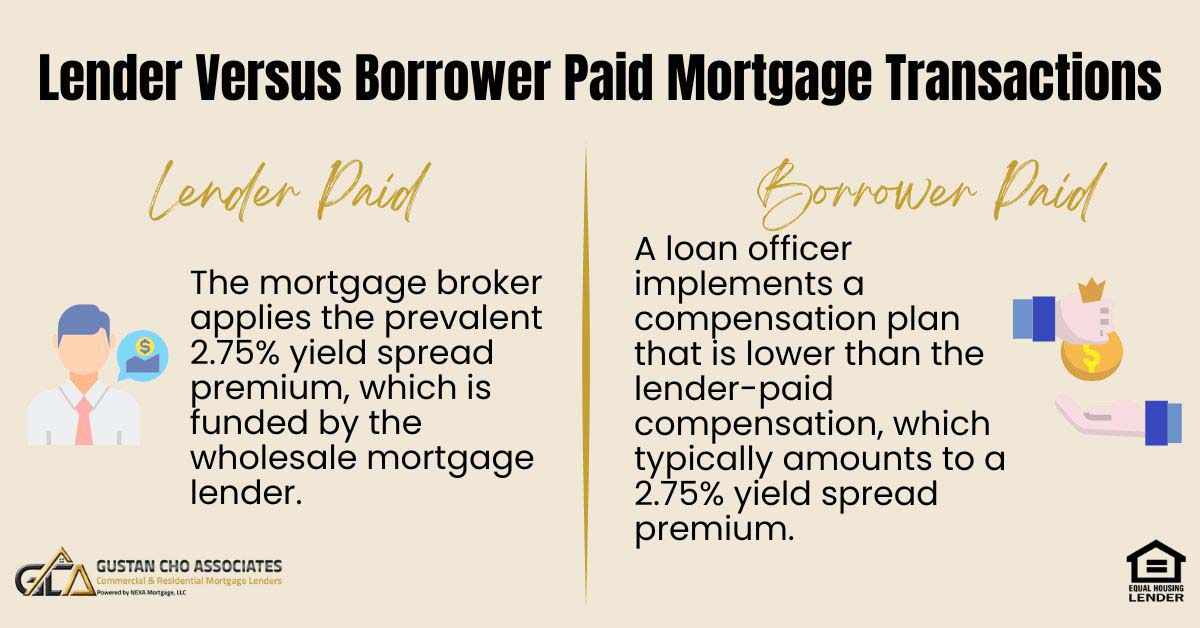
MemberAugust 20, 2026 at 2:25 am in reply to: Lender-Paid vs Borrower-Paid Mortgage TransactionsBorrowers need to understand the distinction between lender-paid and borrower-paid mortgage arrangements. The primary difference concerns how the broker is compensated; however, this does not imply that one party assumes all associated costs.
What Is Lender-Paid Compensation?
With lender-paid compensation, the wholesale lender pays the broker’s fee in accordance with their agreement with the brokerage.
For example, with a $400,000 mortgage and a 2% lender-paid fee, the broker receives $8,000 from the wholesale lender. This fee is incorporated into the lender’s pricing structure, meaning the borrower ultimately bears the cost indirectly.
In some cases, lender-paid arrangements may offer more favorable pricing, potentially allowing borrowers to allocate funds toward moving or other home-related expenses.
What is Borrower-Paid Compensation?
With borrower-paid compensation, the borrower is responsible for paying the broker’s fee directly. For instance, with a $400,000 mortgage and a 2% broker fee, the borrower would pay $8,000 directly to the broker rather than having the lender cover this cost.
Since the lender does not cover the broker’s fee in this scenario, borrower-paid pricing can occasionally result in more favorable mortgage terms, despite the higher upfront payment required from the borrower.
Borrower-paid compensation may be advantageous for individuals with sufficient funds who intend to retain their mortgage for an extended period, as it can reduce monthly payments.
Lender-Paid Compensation and Lender Credits Explained
Distinguishing between lender-paid broker fees and lender credits can be challenging for many borrowers. Lender-paid broker compensation is the fee the wholesale lender pays the broker for arranging the loan. Lender credits are amounts applied to your mortgage to help cover your closing costs.
Depending on the selected interest rate and pricing, borrowers may receive both lender-paid broker fees and lender credits to offset closing costs.
Even when the broker is paid directly by the borrower, the lender may still provide credits to assist with certain closing costs. Federal regulations generally permit the lender to compensate the broker while also offering credits for additional expenses. It is important to recognize that lender credits and broker compensation are distinct and serve different functions.
Borrower-Paid Compensation Is Different from Discount Points
Borrower-paid broker fees are not the same as discount points. Broker compensation refers to the fee paid to the mortgage broker for facilitating the loan process. Discount points are additional payments made to obtain a lower interest rate.
For example, a borrower might pay $6,000 to the broker and $3,000 for discount points. These represent separate costs serving distinct purposes.
Direct payment to the broker is distinct from purchasing discount points. Discount points do not offset the broker’s fee.
Can a Loan Officer Benefit More If They Give the Borrower a Higher Rate?
Federal regulations prohibit mortgage loan officers from receiving increased compensation based on loan characteristics such as interest rates. Loan officers are not permitted to earn higher commissions if a borrower selects a higher rate. Although lenders may offer varying rates, it is unlawful to adjust a loan officer’s compensation according to the borrower’s chosen rate or loan term. Anti-steering laws further prevent loan originators from directing borrowers toward loan terms that would increase their own compensation.
Example of Lender-Paid vs. Borrower-Paid Compensation
Let’s say you take out a $400,000 mortgage. These numbers are just examples and do not reflect current rates. With the lender-paid option, the interest rate may be 6.75%, and the lender pays the broker $8,000. The borrower does not pay this fee directly.
If the borrower pays the broker, the interest rate could be 6.375%. In this scenario, the borrower pays the $8,000 fee rather than the lender.
Although 6.375% is a lower rate, it is important to consider the time required to recover the additional upfront payment through monthly savings. In this example, paying the extra $8,000 reduces the monthly payment by approximately $150.
Mortgage Break Even Point
The break-even point would be reached in about 4 years and 5 months, or 53 months. If the mortgage is sold, paid off, or refinanced before reaching the break-even point, the lender-paid option is generally more advantageous, even with a higher interest rate. However, for borrowers who intend to keep their mortgage for many years, paying the broker’s fee upfront to secure a lower rate may yield greater long-term savings.
When Borrower-Paid Compensation May Make Sense
Borrower-paid compensation is beneficial for individuals with sufficient funds for closing who can secure a significantly better interest rate by paying the broker directly. It can also assist borrowers with a high debt-to-income ratio who require a lower monthly payment to qualify for a loan.
The longer the borrower remains in the home, the more opportunity there is to recoup the upfront cost. Borrower-paid compensation can be particularly attractive when lender pricing allows for a reduced interest rate, potentially resulting in substantial savings over the life of the loan.
Benefits of Lender Paid vs Borrower Paid Compensation
Lender-paid compensation may be preferable for borrowers seeking to minimize closing costs, avoid substantial broker payments, and retain cash for emergencies, renovations, moving, or other expenses. Lender-paid compensation is suitable for borrowers intending to sell or refinance in the near future. If the borrower is unable to recover the upfront cost of a lower rate before moving or refinancing, paying additional fees may not be justified.
When evaluating lender-paid versus borrower-paid compensation, it is important to consider factors beyond the interest rate.
Broker fees, discounts, lender credits, closing costs, required cash at closing, and monthly payments should all be assessed. In some cases, the mortgage with the lowest overall cost may have a higher interest rate. Some borrowers sell or refinance shortly after paying additional fees to lower their interest rate, which may not result in savings. Retaining a mortgage for 15 or 20 years allows for greater benefit from lower payments. Determining the break-even point is essential.
Loan Originator Compensation
Federal Regulation Z requires mortgage loan originators to tell borrowers how much they get paid. The amount can change depending on the loan type. originator cannot receive any additional compensation for the same loan. These rules are meant to prevent loan officers from being paid more for placing borrowers in loans that are not in their best interest.
Each mortgage lender and brokerage has its own policies regarding compensation, pricing, and compliance that must be followed.
When comparing lender-paid and borrower-paid arrangements, it should not be assumed that one is universally superior. Lender-paid compensation is generally preferable for those seeking to minimize out-of-pocket expenses. Borrower-paid compensation is more advantageous for borrowers who intend to retain their mortgage long enough to recover the additional upfront cost.
How to Evaluate the Benefits of Lender-Paid vs Borrower-Paid Compensation on Mortgage Transactions
The most effective approach to comparing lender-paid and borrower-paid mortgages is to evaluate the entire transaction rather than focusing solely on the interest rate.
When selecting a mortgage, it is important to consider the interest rate, monthly payment, broker fees, discount points, lender credits, closing costs, required cash at closing, and the time needed to reach the break-even point to determine the most suitable option.
https://gustancho.com/lender-versus-borrower-paid/

gustancho.com
Lender versus Borrower Paid Mortgage Transactions
Difference between Lender versus Borrower Paid Mortgage Transactions is borrower paid is when lender charges lower YSP for better rate
-
Request for Home Equity Line of Credit (HELOC) Program Guidelines
Thank you for the opportunity to learn more about your Home Equity Line of Credit (HELOC) program. I am considering this program for myself and may also share information with family and friends. To streamline the application process and ensure that only qualified applicants proceed, could you please provide detailed information regarding your program? I would appreciate clarification on the following points:
a. Minimum credit score
b. Maximum CLTV/LTV
c. Minimum and maximum HELOC amounts
d. Debt-to-income ratio limits
e. Whether the interest rate changes over time and how it is set
f. Current rate range or margin over Prime
g. Draw period and repayment period
h. Interest-only payments
i. Initial minimum draw
j. Closing fees
k. Lender fees
l. Annual fees
m. Early termination fees
n. Whether closing costs can be added to the HELOC balance
o. Property value check requirements (full appraisal, automated valuation, desktop appraisal, broker price opinion)
p. Primary residence, second home, investment property eligibility
q. Property types
r. Minimum time/ownership
s. Rules for properties that were recently listed or are currently for sale
t. Papers needed to prove income
u. Rules for people who work for themselves
v. Rules about savings or backup funds
w. Whether there are limits based on the type of first mortgage
x. Whether combined loan-to-value limits change for lower credit scores and higher debt-to-income ratios
y. States where the program is active
z. Average time needed to review and finalize the loan
Additionally, it would be helpful if you could outline the most common reasons for application denial and specify any additional criteria that may prevent approval. This information will allow us to address potential issues before submitting a HELOC application.
My objective is to ensure that only well-qualified applicants apply, thereby minimizing the submission of applications that are unlikely to be approved.
-
Mortgage protection insurance (MPI) pays off all or most of the mortgage if the insured spouse dies. This means the surviving spouse can stay in the home without worrying about mortgage payments.
An MPI is usually a type of life insurance policy that decreases over time to match the mortgage balance.
- Many people get this policy when they first take out a mortgage, but it can also be added later.
- Lenders, banks, and insurance companies often offer these policies.
- MPIMPI payments usually remain the same throughout the whole policy, which often lasts as long as the mortgage.
- The payout starts at the mortgage amount and decreases as you pay down the loan. If a claim is made, the lender receives the funds to pay off the remaining mortgage balance.
- If the insured spouse, in this case the husband, dies while the policy is active, the mortgage is paid off in full. The surviving spouse can stay in the home without worrying about mortgage payments.
Limitations of Coverage
- Most policies cover only the principal and interest on the mortgage.
- Other costs, such as property taxes, homeowners’ insurance, escrow payments, and association fees, must still be paid by the surviving spouse.
- As you pay down your mortgage, the policy payout also gets smaller, but your payments usually stay the same.
- If you refinance your mortgage or move, your coverage usually does not continue.
- You will likely need to get a new policy based on your age and health at that time.
- Some policies offer extra features, such as coverage for disability, critical illness, or job loss, but the main benefit remains the death benefit.
- In the absence of insurance, the Garn-St.
- The Germain Depository Institutions Act of 1982 gives most lenders the right to demand full repayment of the loan upon the borrower’s death and the transfer of title to a relative, usually a surviving spouse, who is expected to live in the property.
- Without income to cover the $4,000 monthly payment, the relative risks default and foreclosure.
Many Comparison Websites and Financial Advisors Recommend Standard Level Term Life Insurance Instead of MPI for Several Reasons, Such as:
- If the insured person dies, the payout goes to the chosen beneficiary, usually the spouse, instead of the lender.
- The beneficiary can use the money to pay off the mortgage, cover household expenses, or support the family.
- The payout amount stays the same over time, even as the mortgage balance gets smaller.
- For people in good health, standard level term insurance is usually less expensive and more flexible than most MPI.
- Coverage under a standard term life policy does not change if the insured sells the home or refinances the mortgage.
- MPI can be a good option for people with health issues that make standard term life insurance too expensive or hard to get.
- Many MPI policies offer simple or guaranteed approval, often with little or no medical exam.
Premium Considerations for Applicants in Their Mid-Sixties
Payments depend on factors such as age, health, smoking status, gender, coverage amount, policy length, and type. For people in their mid-sixties, payments are much higher, and coverage periods are shorter, usually limited to 10 or 15 years rather than 20 or 30.
Recent Market Data for Healthy Non-Smokers (actual quotes may vary)
- For MPI or mortgage life policies, $250,000 of coverage for a 65-year-old usually costs $150 to $250 per month.
- Higher amounts, like $400,000, cost between $230 and $390 per month.
- Payments are even higher for people with health problems or who smoke.
- For standard term life insurance, a healthy 65-year-old non-smoking man can expect to pay $80 to $230 per month for a 10-year policy with $250,000 to $300,000 in coverage.
- Longer policies cost more, women usually pay less, and higher coverage means higher payments.
- In their 60s, they often have mortgage balances between $140,000 and $250,000.
- A $4,000 monthly payment shows a large mortgage in an expensive area with higher interest rates.
- To find your exact payment, get personalized quotes that consider your age, health, and location.
Find out your exact mortgage balance and get quotes for MPI (if available), specialized providers, and regular term life insurance for the insured person. Consider adding coverage for taxes, insurance, and other related costs. Review the spouse’s income or pension and think about whether moving to a smaller home could help. Also, include savings,
Security survivor benefits, and other resources. Review any existing policies, such as retirement accounts and life insurance. Talk to a financial advisor or attorney, and connect with an independent insurance agent to explore your options.
Both mortgage protection insurance and term life insurance are designed to protect a surviving spouse and help keep the home in the family. For people in their mid-sixties, coverage is still possible, but it costs much more than for younger buyers. It is important to carefully compare MPI and standard term life insurance. Life insurance is essential.
-
Tom Miller
MemberAugust 1, 2026 at 5:42 am in reply to: Mortgage Broker Sharing Open Area Office with a RealtorNMLS State Licensing Costs for Mortgage Brokers, MLOs, Branches, and DBAs
If you want to start a mortgage brokerage, get licensed as a mortgage loan originator, open a branch, or register a DBA, you will soon see that licensing costs can vary a lot. Some consultants provide quotes that cover only their own fees, while others include government fees, NMLS charges, state application costs, surety bonds, company registrations, compliance policies, and many other expenses.
This means that two proposals for what seem like identical projects might differ by thousands—or even tens of thousands—of dollars.
The Nationwide Multistate Licensing System (NMLS) mainly acts as a platform for licensing and filing. NMLS does not issue mortgage licenses; state regulators review applications and decide whether to approve a mortgage company, broker, branch, DBA, or individual MLO license.
Usually, licensing costs fall into four main groups: NMLS system fees, state licensing fees, outside expenses, and consultant fees.
What Do Mortgage Licensing Companies Normally Charge?
Mortgage licensing consultants usually charge a fee to handle the paperwork: preparing applications, entering information into NMLS, organizing documents, submitting everything, and answering regulators’ questions. For a single-state MLO license, expect to pay between $300 and $750. If you are an MLO changing companies, the fee for transferring your sponsorship or adding a new employer usually costs $100 to $350 per state.
Setting up a new mortgage branch or net branch usually costs $750 to $2,000 per state in consultant fees. In states with extra requirements—such as special qualifications, branch manager requirements, office limits, or additional paperwork—fees can rise to $2,000 to $5,000.DBA or trade name to an existing mortgage company typically costs $500 to $1,500 per state in professional fees. If a state requires a separate Other Trade Name license, launching your first mortgage brokerage in a state usually means budgeting $3,000 to $7,500 for professional licensing fees. Each additional straightforward state adds $1,500 to $4,000. If you need an individual qualifier, a physical office, audited financials, detailed policies, or expect lots of regulatory back-and-forth, fees can soar to $5,000 to $12,000 or more. follow-up may cost $5,000 to $12,000 or more in professional fees.
A full-scale mortgage company licensing project can rack up consultant fees of $30,000 to $75,000. If you are aiming for near-nationwide coverage, professional fees may range from $100,000 to $250,000, or even higher.
These amounts usually cover only consultant fees. Unless the proposal says otherwise, they do not include government filing fees, surety bonds, registered agent services, Secretary of State registrations, audited financial reports, background checks, office costs, compliance policies, or other outside expenses. NMLS charges processing fees for each agency and each license. A company applying in multiple states does not pay a single NMLS fee across all states. It usually pays an NMLS processing fee for each license application sent to each state agency.
The NMLS processing fee for a company license filed through the MU1 is generally $120 per license. The annual NMLS renewal processing fee is also generally $120 per company license.
The NMLS processing fee for a branch license filed through the MU3 is generally $25 per branch license. The annual NMLS renewal fee is also generally $25 per branch license.
The NMLS processing fee for an individual MLO license filed through the MU4 is generally $35 per license. The annual NMLS renewal fee is also generally $35 per MLO license.
When a mortgage company requests sponsorship of an MLO license, the sponsoring company typically pays a $35 sponsorship fee per license sponsored.
The SAFE national mortgage loan originator test generally costs $110. An NMLS criminal background check generally costs $36.25, and the NMLS credit report fee is generally $15.
NMLS may charge a 2.5% service fee for credit card payments. ACH payments usually do not have this fee.
Example of NMLS Costs for a Five-State Company
For example, a mortgage company applying for broker licenses in five states and sponsoring one MLO in all five states would incur the following costs:
The company would generally pay five NMLS company processing fees of $120 each, for a total of $600.
The MLO would generally pay five individual NMLS application fees of $35 each, for a total of $175.
The sponsoring company would generally pay five sponsorship fees of $35 each, for another $175.
The MLO may also need a criminal background check costing approximately $36.25 and a credit report costing approximately $15.
The estimated total NMLS charges would be approximately $1,001.25.
This amount does not include state application fees, surety bonds, corporate registrations, financial statements, consultant fees, education, licensing examinations, or other related expenses.
Cost to License a Brand-New MLO
A new mortgage loan originator must complete education, pass the SAFE exam, maintain an NMLS record, undergo a criminal background check and credit report, and submit applications to the appropriate state regulators.
A 20-hour mortgage prelicensing education course normally costs approximately $250 to $500. The SAFE national test generally costs $110. The NMLS MU4 processing fee is generally $35 per state. The criminal background check is approximately $36.25, and the credit report is approximately $15.
The individual state application fee may range from about $50 to $500 or more. Some states also require extra state-specific education, which may add about $20 to $200 or more. A consultant may charge approximately $300 to $750 to prepare and manage a one-state MLO application.
A good starting budget for a new MLO in one state is $800 to $1,500. The final cost depends on your state, your education provider, your licensing consultant, and any extra paperwork you might need.
When an MLO leaves one mortgage company for another, the license does not transfer between companies. The former company terminates its sponsorship, and the new company submits a new sponsorship request.
The NMLS sponsorship fee is generally $35 per license. A state may also charge a transfer, reactivation, amendment, or sponsorship fee. That charge typically ranges from $0 to approximately $150, though it may be higher in some jurisdictions.
A licensing consultant may charge approximately $100 to $350 per state to handle the sponsorship transfer or new sponsorship request.
The total cost for an established MLO to join a new mortgage company typically ranges from $135 to $535 per state, assuming the license is current and there are no outstanding issues.
Some eligible MLOs may qualify for Temporary Authority to start loans while their state license applications are being processed. Temporary Authority is not automatic in all cases. It usually depends on the MLO’s past licensing or federal registration, the length of any break in service, employment as a W-2 employee, and sponsorship by a properly licensed mortgage company. The company and MLO should check the MLO’s Temporary Authority eligibility through NMLS and the state regulator before allowing the MLO to originate loans.
Cost to Open a Mortgage Broker Company
Starting a mortgage broker company involves much more than just filling out an MU1 application.
The NMLS company processing fee is usually $120 per license. The state application or licensing fee may range from about $200 to $1,600. Some expensive states or license types may charge $5,000 or more.
If the mortgage company is based in one state but applies for a mortgage license in another, it may need to register as a foreign business. This foreign registration may cost about $100 to $700 per state.
A registered agent may cost about $100 to $300 per year in each state where it is needed.
Most mortgage broker licenses also need a surety bond. The bond amount may range from $25,000 to $150,000 or more, depending on the state and license type. The mortgage company pays an annual bond premium, not the full bond amount.
The annual bond premium may range from $200 to $1,500 or more, depending on the bond amount, the company’s credit, ownership history, financial strength, and other risk factors.
Financial statement costs can also vary a lot. A basic internal or unaudited financial statement may cost about $250 to $1,000. A CPA-prepared financial statement may cost about $1,000 to $3,500.
A reviewed financial statement may cost about $3,000 to $8,000. An audited financial statement may cost about $7,500 to $25,000 or more, depending on the company’s size and financial health.
Compliance policies and procedures may cost $2,000 to $10,000 or more. Costs depend on whether the consultant provides generic templates or custom policies for the company’s products, states, employees, advertising, cybersecurity, complaint handling, quality control, fair lending, anti-money-laundering steps, and other operations.
The licensing consultant’s fee may range from about $1,500 to $7,500 or more per state.
For a basic mortgage broker license in your home state, plan on an initial budget of $5,000 to $12,000.
If you are applying in a more complex state, costs can rise to $12,000 to $30,000 or more. This is especially true if the state requires an audited financial statement, a physical office, an experienced qualifying individual, a state-specific branch manager, significant net worth, or a detailed policy package. A state mortgage brokerage may need an initial licensing budget of $20,000 to $50,000. These estimates do not include the net worth that the company must keep. This is not a fee paid to the regulator; instead, the money must remain within the company and be reported in its financial statements.
Why State Mortgage Licensing Costs Vary So Much
Mortgage company licensing costs can vary a lot from state to state.
For example, an Alabama mortgage broker application may involve approximately $720 in combined state and NMLS-related application charges. Alabama may also require a $25,000 surety bond, a qualifying individual, and separate licensing for branch locations.
An Alaska broker or lender license may involve approximately $1,620 in initial application fees, plus possible hourly investigative expenses. Alaska may also require a separate Other Trade Name license for each DBA used by the company.
An Arizona mortgage broker application may involve approximately $620 plus a prorated licensing fee. Arizona may also require an in-state office and an Arizona-resident responsible individual who meets the state’s experience requirements.
An Arkansas mortgage broker application may involve approximately $870 in initial charges and a $100,000 surety bond.
A California Finance Lenders Law license may involve approximately $420 in initial state and NMLS-related charges, in addition to applicable surety-bond and net-worth requirements.
A Colorado mortgage company registration may involve approximately $230 in initial charges. Colorado also has state-specific bond coverage, MLO licensing, and filing requirements that must be reviewed separately.
A Connecticut mortgage broker application may involve approximately $620 in application fees, along with a $50,000 surety bond and a $50,000 net worth requirement.
A Delaware mortgage broker application may involve approximately $870 in initial charges and a capital or net-worth requirement of approximately $50,000.
A Kentucky mortgage broker licensing estimate may be approximately $1,120, although the exact licensing structure must be reviewed carefully, as the required license may depend on the company’s activities.
A Louisiana residential mortgage lending or brokerage license may involve approximately $620 in initial application charges, along with applicable bond, company, and qualifying-individual requirements.
A Massachusetts mortgage broker application may involve approximately $1,020 in initial charges. Massachusetts may also require reviewed financial statements and separate treatment of additional trade names.
A Mississippi mortgage broker application may cost approximately $1,600 in state and NMLS-related application charges.
A Montana mortgage broker application may involve approximately $620 in initial charges. Montana may also require a qualifying individual with acceptable mortgage experience and an applicable surety bond.
A North Carolina mortgage broker application may involve approximately $1,350 in initial charges, along with state-specific requirements for the company, qualifying individual, and licensed personnel.
A Pennsylvania mortgage broker application may involve approximately $1,120 in initial charges. Pennsylvania may also require qualifying-individual education and experience.
A Rhode Island loan broker application may involve approximately $945 in initial charges. The qualifying individual may also need to hold a Rhode Island MLO license.
A Tennessee mortgage license may involve approximately $1,270 in initial charges. Tennessee may also require a substantial broker bond and CPA-compiled financial statements.
A Vermont mortgage broker application may involve approximately $1,120 in initial charges, along with other state-specific company requirements.
A District of Columbia mortgage broker application may involve approximately $1,220 in initial charges and a net-worth requirement that may apply to each licensed location.
These amounts are early estimates. State licensing fees and rules may change, so it is important to check the official NMLS state licensing lists and the latest instructions from each regulator before applying.
Cost to Open a Mortgage Net Branch
A mortgage net branch is usually a business setup in the industry rather than a separate type of NMLS license.
From a regulatory view, the setup usually includes a licensed parent mortgage company, a licensed or registered branch location, a branch manager, sponsored MLOs, and any approved DBA or trade name.
The NMLS MU3 branch processing fee is generally $25 per branch license.
The state branch application fee may range from $0 to bout $600. Some states charge very little for branch approval, while others charge almost as much as the main company license.
The branch may also need foreign registration, a city business license, zoning approval, an occupancy permit, a registered agent, extra surety bond coverage, or a bond rider.
If the branch manager needs a new MLO license, sponsorship, or qualifying-individual approval, those expenses must also be included.
A licensing consultant may charge approximately $750 to $2,000 for a straightforward branch application. A difficult state may generate professional fees of approximately $2,000 to $5,000.
A simple mortgage branch may cost $1,000 to $3,500 to establish from a licensing perspective.
A more complex branch involving an in-state manager, a physical office requirement, a separate DBA license, additional bond coverage, extensive documentation, or regulatory follow-up may cost $5,000 to $15,000 or more.
These licensing expenses do not include rent, office furniture, signage, utilities, internet, technology, security, zoning, occupancy permits, or other operating costs.
A DBA does not create a separate legal mortgage company. The parent mortgage company remains the licensed legal entity and remains responsible for the branch, its employees, advertising, disclosures, loan files, compliance, complaints, and regulatory reporting.
The trade name must normally be legally registered with the Secretary of State, the county, the municipality, or another appropriate government authority.
The DBA must generally be added to the parent company’s MU1 filing as an Other Trade Name. It may also need to be associated with the applicable branch MU3 filing.
The trade name should not be used in mortgage advertising, websites, social media, signage, disclosures, business cards, email signatures, or consumer communications until all relevant mortgage regulators have approved its use.
When entering the trade name into NMLS, the company generally lists the exact name used in the marketplace. The letters “DBA” are not normally placed in front of the trade name in the NMLS Other Trade Name field.
There is no single universal NMLS DBA fee. A company may be able to submit an MU1 amendment without paying another standard company application fee, but the state regulator may impose an amendment fee, trade-name fee, new license fee, or separate Other Trade Name authorization requirement.
The company may also have to pay Secretary of State assumed-name registration fees, publication fees, county filing fees, municipal registration fees, bond-rider fees, and consultant fees.
Some states require a separate license or authorization for every additional trade name.
For example, Alaska may require an Other Trade Name license for each DBA and may limit the number of trade names a mortgage company may maintain.
Massachusetts generally has specific rules regarding the number of trade names that can be used under the principal license and may require separate licensing for additional names.
Puerto Rico may also require a separate authority for additional trade names.
A simple DBA registration and mortgage regulator amendment may cost $500 to $1,500, including professional assistance.
A state that requires a separate Other Trade Name license may cost $1,500 to $3,500 or more. In multiple states, the company should expect to pay separate corporate, state, and professional fees in every jurisdiction where the name will be advertised or used.
What Should Be Included in a Licensing Consultant’s Proposal?
A mortgage licensing consultant should never just hand you a mysterious lump-sum quote.
The proposal should clearly separate government charges, corporate registration expenses, third-party costs, professional service fees, and ongoing compliance expenses.
Government charges should include NMLS processing fees, state agency application fees, branch fees, MLO application fees, background checks, credit reports, sponsorship charges, investigation fees, and renewal costs.
Corporate expenses should include foreign qualification, registered-agent service, certificates of good standing, DBA registrations, assumed-name filings, annual reports, and Secretary of State fees.
Third-party costs should include surety bond premiums, CPA-prepared financial statements, fingerprinting, compliance policies, quality control plans, cybersecurity policies, background checks, office inspections, and any required professional reports.
Professional fees should specify how much the consultant charges for preparing the application, entering data into NMLS, collecting documents, coordinating filings, addressing regulatory deficiencies, and following the application through to approval.
Ongoing expenses should include annual renewals, Mortgage Call Reports, financial condition reports, annual reports, continuing education, bond renewals, registered agent renewals, license amendments, and compliance support.
The engagement agreement should explain whether the consultant will determine the appropriate mortgage broker, mortgage lender, correspondent lender, servicer, processor, or other licensed party.
It should state whether the consultant will prepare the MU1, MU2, MU3, and MU4 filings.
It should explain whether the consultant will handle foreign corporate qualifications, registered agents, surety bonds, qualifying individuals, branch managers, MLO sponsorships, and DBA registrations.
The proposal should state whether compliance policies and procedures are included or charged separately.
It should also explain whether the consultant will address deficiencies identified by the state regulator and continue working until the license is approved.
Some consultants charge one flat fee through final approval. Others include only the initial submission and begin charging hourly when a regulator requests additional information.
The agreement should clearly explain which arrangement applies.
What Is a Fair Price for Mortgage Licensing Services?
For an established company with clean ownership, acceptable financial records, qualified management, and no regulatory history, a professional fee of approximately $3,000 to $5,000 for the first uncomplicated state may be reasonable.
A fee of approximately $1,500 to $3,000 for each additional straightforward state may also be reasonable.
A professional fee of approximately $750 to $1,500 for a routine branch application may be reasonable.
A professional fee of approximately $500 to $1,000 for a routine DBA amendment may be reasonable.
A professional fee of approximately $100 to $300 per state for an existing MLO sponsorship transfer may be reasonable.
Higher fees may be justified when the consultant is also preparing compliance policies, obtaining foreign registrations, coordinating surety bonds, working with a CPA, addressing regulator deficiencies, locating or qualifying a responsible individual, setting up Mortgage Call Reports, assisting with a physical office, or providing post-approval compliance support.
Chasing the lowest price is not always the smartest move.
A very low proposal may cover only the entry of data into NMLS. The company may still be responsible for preparing policies, registering the corporation, securing the bond, obtaining financial statements, finding a qualifying individual, answering regulator questions, and correcting deficiencies. One quote is $2,500, while another quotes $10,000 for what initially sounds like the same mortgage license.
Before selecting a licensing company, the mortgage business owner should request a written, state-by-state breakdown of all estimated government fees, professional fees, surety bond expenses, financial statement costs, corporate registration costs, branch charges, DBA expenses, MLO fees, and ongoing renewal obligations.
All figures are estimates. Mortgage licensing fees, state requirements, bond amounts, net worth standards, qualifying individual rules, and office requirements may change. It is essential to review current NMLS checklists and official state regulator instructions before filing.
-
Tom Miller
MemberJune 26, 2026 at 12:21 am in reply to: FHA Loan For Manufactured Home with Low Credit ScoresFHA provides Standard 203(k) loans for existing manufactured homes. These homes are eligible for financing. While a permanent concrete foundation is often preferred, it is not always necessary. Whether you are buying or refinancing, HUD 203(k) rules still apply.
To qualify, the property must meet current FHA requirements for manufactured homes. These include:
- The home must be built after June 15, 1976, and be a certified HUD home.
- The home must be, and remain, legally considered real property (the loan also covers the land).
- The home must remain on its permanent chassis.
- The home must have a permanent foundation as defined by FHA and HUD.
- A concrete foundation alone may not be enough.
- The lender will probably ask for an engineer’s certificate to confirm the foundation meets FHA and HUD standards.
- The planned work must not alter the manufactured home’s original structural components, which were built under the HUD manufactured-housing standards.
If a manufactured home needs major upgrades, the Standard FHA 203(k) loan is usually a better choice than the Limited 203(k). This loan covers many types of repairs, such as structural, plumbing, and electrical work, as well as bathroom and other major renovations. However, you cannot use the Standard 203(k) if the home needs to be moved or completely rebuilt.
To sum up:
- You can use an FHA Standard 203(k) loan to improve a manufactured home on your land if it has a permanent concrete foundation and needs major repairs.
- The key things to remember are that the home must remain FHA-approved, the foundation must comply with FHA rules, and the work cannot involve tearing down or replacing the home.
You may hear conflicting information because many FHA lenders and brokers either do not offer 203(k) loans for manufactured homes or have policies prohibiting them. This is because of lender policies, not FHA rules.