
Sub Forums
-
-
Credit
Topics: 6 -
Mortgage Process
Topics: 13 -
Arrive CRM
Topics: 1 -
Clear To Close
Topics: 0 -
LoanSifter
Topics: 0
-
 1 week, 5 days ago
-
All Discussions
-
THIS Message is for Mr. Mike Neill. Can GCA Oakbrook Terrace get loan officers from AXEN do third party processing? Mr. Bill Burger-King said we could. Can we explore that possibility.
-
NMLS State Distance Requirements from MLO Residence to Mortgage Branch Office: What states have NMLS MLO personal residence to mortgage branch distance requirements?
-
What states require an NMLS licensed MLO personal residence needs to live within a set driving distance to the sponsoring mortgage company or a brick and mortar branch of the mortgage company. I heard there were 15 states with such distance from personal residence to brick and mortar NMLS COMPANY location. I know Wisconsin, Nevada, New Jersey, and Maryland are some of the states with maximum distance requirements. Also how much does applying for NMLS COMPANY. BRANCH, and Individual license cost.
-
This discussion was modified 1 week, 2 days ago by
 Gustan Cho.
-
This discussion was modified 1 week, 2 days ago by
-
Partnership Models for MLOs, Owners of Mortgage Net Branches, Branch Managers; Brokerage Joint Venture, Merger, and Third-Party Marketing Agreements
There are several ways to create mortgage branch partnerships. Some MLOs choose to start their own Mortgage Net Branch, while Branch Managers may join independent branches to build stronger teams. Other options include joint ventures, marketing partnerships, referral agreements, or full mergers.
No single partnership model works best for everyone. The right choice depends on factors like licensing, compliance, pay, hiring, marketing, loan volume, and your long-term goals. Take time to think about these before deciding.
With so many options, mortgage professionals can find partnerships that align with their goals. Picking the right model now can help avoid problems later.
Below are some of the most common partnership models, each with its own benefits and challenges. For example, an MLO might choose to start a Mortgage Net Branch.
Starting a Mortgage Net Branch
This approach lets the MLO do more than just approve loans and run a whole branch. Success depends on smart hiring, careful adherence to rules, producing many loans, and strong support from the sponsoring company. Important parts include controlling branch costs, handling marketing, and setting the MLO’s power over other loan officers.
Consolidation of Two Mortgage Net Branches Into a Single Branch
When two branch managers work together to create a larger branch, this collaboration can reduce costs, strengthen leadership, attract skilled staff, and make resource sharing easier. Consolidation is most effective when both branches share similar values. It’s important to review their compliance history and clearly outline how costs, control, and decision-making will be handled.
Limited Business Contract Between Two MLOs
Two competing MLOs may form a limited partnership to work together on certain referral sources, marketing projects, or areas without fully combining their businesses. In these partnerships, MLOs need to agree on who brings in business, who owns borrower relationships, how pay and costs are handled, and how the partnership will end.
Agreement Between Two Branch Managers
Branch managers can share resources without fully merging. For example, one branch may be better at marketing while another is stronger in operations, hiring, or product knowledge. This works best when each manager has different strengths. The agreement should clearly explain roles, payments, and rules to follow.
Third-Party Marketing Agreement
Mortgage professionals can also create third-party marketing agreements with other industry experts or companies.
These agreements should be checked to ensure compliance with rules, written down, fairly priced, and confirmed to meet RESPA, advertising, licensing, and consumer disclosure requirements.
Joint Venture Model
Independent companies can use this model to start a new business. It often includes systems for sharing leads, hiring, processing referrals, training, or marketing. The agreement should clearly explain ownership, how profits and costs are shared, who runs operations, who checks rules, and what happens to ideas or products if someone leaves.
Shared Services Model
- This model works when several branches or brokerages share resources like processing systems, marketing, recruiting, training, technology, or office support.
- Each branch stays independent but shares costs to save money.
- Before finalizing the agreement, clearly explain how employees, expenses, data, following rules, borrower privacy, and file ownership will be handled.
Full Branch or Brokerage Merger
Merging branches or brokerages can simplify systems, increase production, and improve hiring and negotiation. However, mergers have risks. Before moving ahead, review leadership roles, costs, debt, brand image, staff, licensing, company culture, pay, and history of following rules.
- Who owns the borrower relationship?
- Who controls marketing and branding?
- Who incurs the expenses?
- How is the division of revenue structured?
- Who has the authority to hire or manage employees?
- Who is responsible for compliance?
- Who bears the burden if one side does more work?
- How does the partnership end, and what does it look like?
- How is the duration of the partnership established?
- How is a dispute settled?
- Can either side leave the partnership without reason?
- Mortgage branch partnership models can help your business grow but moving too quickly or trusting a handshake rather than a written agreement can cause problems later.
If you are a mortgage professional, branch manager, broker owner, MLO, recruiter, processor, or compliance expert, your feedback and ideas are welcome to help improve this model using proven practices.
Starting Mortgage Net Branch: A Comprehensive Guide for 2024
-
Need Help Comparing Mortgage Options?
Closing costs determine whether lender-paid or borrower-paid options have the better deal. Just because the rate is lower doesn’t mean it’s the better option. Gustan Cho Associates will analyze the deals and help borrowers compare loan options to determine which will actually save the most money.
Lender-Paid and Borrower-Paid Rules Borrowers Should Know
No loan selling/steering is allowed. Because of that, there are rules regarding borrower-paid and lender-paid. Borrowers should see disclosures that clearly state the loan’s costs and terms. Loan originators cannot reduce their compensation by changing the loan terms in a way that violates the rules. However, lenders, points, and borrower credits must be properly disclosed.
The importance of the Loan Estimate and the Closing Disclosure cannot be overstated. They are essential documents that summarize the details of what a borrower will ultimately be paying, what they will be credited, and the final cash to close.
Analyzing Lender-Paid vs Borrower-Paid
The easiest way to compare the two options is to request pricing for both. Items to compare include interest rates, monthly payments, total closing costs, lender credits, points, cash to close, and anything else relevant that may come up.
Also, the borrower should ask about the loan retention period. If the loan will be retained for a short period, the higher closing costs will not be worth it. However, if the closing costs are to be paid over a long period, it will be worth paying a lower interest rate.
The goal is not to select the option with the most attractive numbers. It is more about the loan structure that aligns with the borrower’s cash, payment, timing, and risk preferences.
Lender-Paid vs Borrower-Paid for FHA Loans
FHA borrowers typically focus on the cash required to close, as FHA loans entail mortgage insurance and the establishment of an escrow account. Lender-paid pricing can help reduce closing costs, but the borrower should consider the higher rate and the resulting monthly payment.
Borrower-paid pricing can be beneficial for a borrower who has the cash and wants a lower payment, which may be necessary if the debt-to-income ratio is tight.
In addition to the cash payment for loan closing, FHA borrowers should evaluate both pricing methods, as minor payment variations can affect loan approval.
Lender-Paid vs Borrower-Paid for VA Loans
Although VA borrowers may be eligible for a loan with no cash down, the loan still has closing costs. VA buyers can pay pre-closed taxes and insurance, as well as title fees, recording fees, and other costs.
Lender-paid pricing can decrease the cash required for closing. This may be especially beneficial to the borrower who wants to maintain their savings after the home purchase.
Borrower-paid pricing may be more advantageous for the VA borrower who wants a lower payment and plans to retain the loan for a long time, as well as for those considering the VA funding fee and the loan’s total cost.
Lender-Paid vs. Borrower-Paid for Conventional Loans
With Conventional loans, pricing may change based on occupancy, property type, credit score, and loan-to-value ratio. Due to risk-based pricing, lender-paid vs. borrower-paid impacts the loan rate and payment.
Borrowers with strong credit and large down payments may have more options. However, the impacts of the two different pricing structures may be considerably larger for a borrower with weaker credit and/or a smaller down payment.
For Conventional loans, Private Mortgage Insurance and other costs should be considered, since interest rates impact the total cost of the loan.
Lender-Paid vs. Borrower-Paid for Non-QM Loans
Pricing for Non-QM loans may also differ from government or Conventional loans. When borrowers use bank statement loans, DSCR loans, asset depletion loans, or other Non-QM programs, they must closely evaluate the rates and costs to determine the best option.
Lender-paid pricing can shift costs down at the expense of a higher rate, while Borrower-paid pricing can improve the rate, but increase costs.
Because Non-QM loans vary widely across lenders and programs, borrowers should request detailed pricing comparisons before deciding which to use.
Conclusion for Lender-Paid vs. Borrower-Paid Mortgage Transactions
Both lender-paid and borrower-paid mortgage transactions are completely acceptable. The better option depends on the borrower’s credit, the loan program they select, the cash to close, the payment they desire, and how long they plan to keep the loan.
Lender-paid pricing can help lower closing costs, but it comes with a trade-off: a higher interest rate. Alternatively, Borrower-paid pricing can help lower the interest rate, but closing costs will be higher.
The right answer varies from one borrower to another. A comprehensive mortgage review should detail both options and clearly articulate the short- and long-term costs for each.
Talk to a Mortgage Professional Before You Choose
Before deciding on lender-paid or borrower-paid pricing, have a mortgage professional compare the two options and detail the rate, closing costs, lender credits, points, and the resulting monthly payment. Gustan Cho Associates is dedicated to helping borrowers review their loan options and identify the loan structure that best meets their home-purchase or refinance goals.
Lender-Paid vs Borrower-Paid Mortgage Transaction FAQIs Lender-Paid Mortgage Pricing Free?
No. Lender-Paid Mortgage Pricing is not free. The Borrower may pay less at loan funding, but the price is built into the interest rate, which may result in a higher monthly payment and a higher overall interest payment if the Borrower is not planning to prepay the loan.
Why Would a Borrower Want a Higher Rate?
A Borrower may want a higher rate to achieve lower closing costs. This may make sense if a borrower is looking to preserve cash, refinance in the short term, or pay less of their own cash at closing.
Can Lender Credits Pay for Closing Costs?
Lender Credits may cover some closing costs, but may not cover all of them. Lender Credits may be affected by limits on prepaid escrow, taxes, and insurance.
Are discount points the same as borrower-paid compensation?
No, they are not the same. Discount points are a way to lower the interest rate, while borrower-paid compensation describes the payment to the mortgage broker or loan originator. While they can both be part of the closing costs, they are different.
Can a borrower shift from lender-paid to borrower-paid before closing?
This can be allowed in some situations, but it depends on the time, the disclosures, the lock terms, the lender, and compliance. Borrowers should request the change as early as possible to avoid delays, as changes can be made only within certain time frames.
Which of the two options is better for first-time homebuyers?
First-time homebuyers usually consider both options, as cash to close is a major factor. Lender-paid pricing can reduce the cash at closing, while borrower-paid pricing can reduce the loan payment. The best option depends on the buyer’s savings, payment, and how long they plan to stay in the home.
Does lender-paid pricing impact loan approval?
Lender Versus Borrower Paid Mortgage Transactions
It can impact the approval if the higher rate pushes the monthly payment and debt-to-income ratio higher. A borrower near the limit should consider both options before locking the rate.
-
This thread is a very important one. A little off topic from what we were covering but extremely important. The mortgage industry is very complex and in many instances, there are situations where it does not make sense. Let’s cover the type of mortgage company you as a newer MLO want to start your career. What I am covering on this thread is 100% truth, transparency, and sometimes difficult to prove but if you have an average IQ, you will figure out what I am saying makes all the sense in the world. Remember one thing, that there is NOT a thing (big or small) in the mortgage industry. There is a lot of money to be made in the mortgage industry, and that is why there are many unethical and not so transparent people in the industry. Here are they type of lenders you will work with:
1. Direct Lender (Full-Eagle Mortgage Banker- uses their warehouse line of credit to fund loans. They originate, process, underwrite, close, and fund government-backed (FHA, VA, USDA) and conventional loans using their warehouse line of credit. After they fund loans, they then package up the loans they fund and group them together and sell it on the secondary mortgage market. The secondary market can be a larger mortgage banker or it can be Fannie Mae and/or Freddie Mac. Usually, a bunch of smaller mortgage bankers will sell the loan their fund to a larger mortgage banker and the larger mortgage banker will sell it directly to Fannie Mae and/or Freddie Mac. With the proceeds the mortgage banker gets from the sale of the funded loans, they will pay down their warehouse line of credit and repeat the process again. That is how mortgage banking works.
2. Mortgage Brokers: Mortgage Brokers are middlemen between a wholesale lender and the consumer. You need to be licensed to be a mortgage broker. Mortgage brokers have limited liability because they do not use their own money (warehouse line of credit) to originate and fund loans. However, mortgage brokers can develop lending partnerships with wholesale lenders. Wholesale mortgage lenders are NOT licensed and cannot originate loans to the public unless they have a retail division that is NMLS licensed. The maximum compensation a mortgage broker can make is 2.75% yield spread premium for the whole mortgage company. Please read the attached guides:
Yield Spread Premium Charged By Mortgage Brokers
Types of Mortgage Lenders and How To Choose The Right One
Difference Between Mortgage Brokers Versus Lenders
-
This discussion was modified 3 days, 17 hours ago by
 Sapna Sharma.

gustancho.com
Yield Spread Premium Charged By Mortgage Brokers
The maximum Yield Spread Premium mortgage brokers can make is 2.75% whereas mortgage bankers are exempt and have no cap
-
This discussion was modified 3 days, 17 hours ago by
-
Cost of Mortgage Broker Company NMLS Licensing:
In this thread, I will cover the tentative cost to get your mortgage broker NMLS company license, the cost and fees to get your individual NMLS licensing, net worth requirements, surety bond requirements, and the requirements for the Qualified Individual or Control person(s). Also covered will be the initial cost of NMLS mortgage broker company licensing, paperwork required, audits, call reports, and timeline. I will cover if the costs and fees to get licensed in 50 states makes sense for a mom-and-pop small mortgage broker shop or if it is more lucrative and profitable to join an already national establish mortgage broker company as a net branch. We can go over several case scenarios and determine which will be a better option:
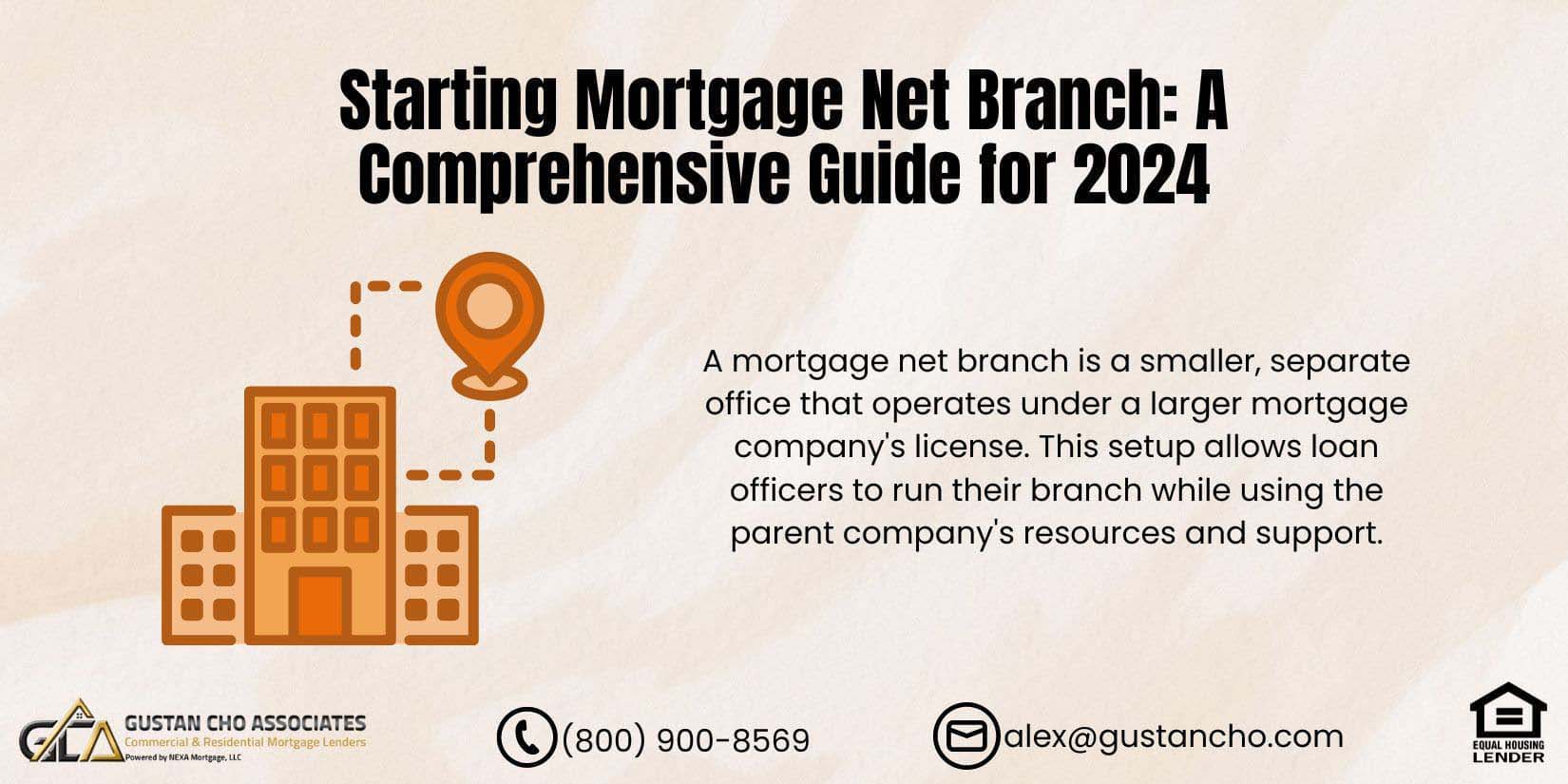
Starting Mortgage Net Branch: A Comprehensive Guide for 2024
gustancho.com
Starting Mortgage Net Branch: A Comprehensive Guide for 2024
Mortgage Loan Officers can explore the idea on starting mortgage net branch and have the opportunity to open their own mortgage business
-
Why is it so difficult to get approved for an individual and company NMLS state mortgage license for the state of New York? What makes NY so much longer and harder to get your individual? Qualified Individual, Control person, and State mortgage broker company license. Thank you.
-
I have NMLS mortgage licensing questions and hope you can help. I’m getting conflicting answers to my questions, even from the NMLS and mortgage licensing companies like Integrity Licensing. I manage a mortgage NET branch on a P&L platform, based in Indiana. I am a small net mortgage branch licensed in 30 states.
I am individually licensed in 30 states, and the mortgage net branch is licensed in 30 states. Can you please advise me on the best, smartest way to move companies from one to C2C? Do I have a loan officer move first? Will the branch and individual NMLS licenses transfer from one company to C2C, or do I need to surrender the branch and start a new one? How about states such as Nevada, California, and Massachusetts, where it took me a long time to get my mortgage net branch and my individual NMLS. Are there any costs, fees, paperwork, or documents required for the new company? How about my name, One Capital Financial, which is a dba? How do I transfer my DBA to the new company? Can you please give me step-by-step guidance on the best, most efficient, and fastest way to make the move? How about our existing pipelines from the loan officers and the producing branch manager? My current branch, as well as I and MLO, are licensed in Hawaii, but the new mortgage company is NOT. I need to be licensed in Hawaii because I have many clients there. The owners of C2C said they will do everything possible to get the company licensed in Hawaii, so I am respectfully requesting your advice on the best, fastest way to get the corporation and/or my branch licensed in Hawaii. If you can give me step-by-step, easy-to-follow bullet points, it would be greatly appreciated.
-
This discussion was modified 3 days, 17 hours ago by Sapna Sharma.
-
This discussion was modified 3 days, 17 hours ago by
-
-
To become a loan officer, you need to complete a 20 hour pre-licensing course and pass the 125 hour three hour national NMLS federal exam. The key in passing the national NMLS exam is to go through hundreds of practice multiple choice question. I highly recommend Angie Crippen of On Course Learning. Angie is hands on and will go above and beyond to get you what you need, whether it is now passing the 125 hour course or throughout your mortgage career. Below is the link the NMLS mortgage licensing school On Course Learning with Angie Crippen as our account executive.
https://gustancho.com/mlo-license-school/
-
This discussion was modified 2 years, 6 months ago by Gustan Cho.

-
This discussion was modified 2 years, 6 months ago by
-
QuickBooks for Mortgage Brokerages: Complete Guide
Here’s everything you need to know about using QuickBooks specifically for your mortgage brokerage:
Recommended QuickBooks Versions
QuickBooks Online Plus or Advanced is ideal for mortgage brokers because:
- Multi-branch tracking capabilities and ease of access across locations The Ultimate Guide to Setting Up QuickBooks for a Mortgage Broker Branch Model
- Class Tracking feature, which is only available in Plus or Advanced The Ultimate Guide to Setting Up QuickBooks for a Mortgage Broker Branch Model
- Advanced reporting for complex commission structures
Key Features for Mortgage Brokers
1. Commission Tracking & Management- Track individual loan officer commissions and splits
- Separate income by loan type (purchase, refinance, etc.)
- Monitor pipeline commissions vs. closed commissions
- Handle 1099 reporting for independent contractors
2. Chart of Accounts Setup
Custom chart of accounts, automated bank feeds, and transaction rules for streamlined bookkeeping How to Set Up QuickBooks Online for Mortgage Brokers: A Step-By-Step Guide specifically designed for mortgage operations:
Income Accounts:
- Commission Income – Purchase Loans
- Commission Income – Refinance Loans
- Yield Spread Premium Income
- Processing Fees
- Other Mortgage-Related Income
Expense Accounts:
- Origination costs, and compliance expenses How to Set Up QuickBooks Online for Mortgage Brokers: A Step-By-Step Guide
- Marketing & Lead Generation
- Loan Officer Commissions
- Compliance & Licensing Fees
- Professional Services (appraisals, credit reports)
3. Branch Management
For multi-branch operations:
- Use Class Tracking to separate different locations
- Track profitability by branch
- Allocate shared expenses across locations
- Generate branch-specific reports
4. Industry-Specific Reporting
- Commission pipeline reports
- Loan officer performance tracking
- Monthly production summaries
- Compliance expense tracking
- Cash flow forecasting based on loan pipeline
Setup Considerations for Mortgage Brokers
Bank Account Integration- Connect business checking, savings, and trust accounts
- Set up automatic transaction categorization rules
- Separate trust account transactions (critical for compliance)
Customer Management
- Track borrower information (limited due to privacy requirements)
- Monitor referral source performance
- Manage vendor relationships (appraisers, processors, etc.)
Inventory Tracking
- Track loan pipeline as “inventory”
- Monitor loans in various stages
- Calculate potential commission income
Integration Capabilities
QuickBooks integrates well with popular mortgage industry tools:
- Loan Origination Systems (LOS): Encompass, Calyx Point, BytePro
- CRM Systems: Top Producer, Chime, Wise Agent
- Compliance Tools: MISMO standards, audit trail systems
- Marketing Platforms: Lead generation and tracking systems
Compliance Benefits
- Audit Trail: Complete transaction history for regulatory reviews
- Trust Account Management: Separate tracking for client funds
- Record Retention: Automatic backup and record keeping
- Financial Reporting: Generate reports for regulatory compliance
Pricing Structure
QuickBooks Online Plans for Mortgage Brokers:
- Plus ($45/month): Good for smaller brokerages (up to 5 users)
- Advanced ($100+/month): Better for larger operations with advanced reporting needs
- Payroll Add-on: Essential if you have W-2 employees
Common Challenges & Solutions
Challenge: Complex Commission StructuresSolution: Use job tracking and classes to separate different commission arrangements and splits
Challenge: Trust Account Management
Solution: Set up separate company files or use bank sub-accounts with strict reconciliation procedures
Challenge: Pipeline vs. Closed Loan Tracking
Solution: Use estimates for pipeline loans, convert to invoices when closed
Best Practices for Mortgage Brokers
- Daily Bank Reconciliation: Critical for trust account compliance
- Monthly Commission Reports: Track individual and company performance
- Quarterly Tax Preparation: Maintain organized records for easy tax filing
- Annual Compliance Audits: Keep detailed transaction records
Alternatives to Consider
While QuickBooks is excellent, some brokers prefer:
- Xero: Better user interface, similar features
- Industry-Specific Software: LendingPad or Encompass with built-in accounting
- Enterprise Solutions: For very large brokerages
Getting Started
- Choose QuickBooks Online Plus or Advanced
- Set up mortgage-specific chart of accounts
- Connect all business bank accounts
- Establish transaction categorization rules
- Train staff on proper transaction coding
- Consider hiring a QuickBooks ProAdvisor familiar with mortgage industry
Would you like me to elaborate on any specific aspect of using QuickBooks for your mortgage brokerage?
Yes
Which specific aspect of using QuickBooks for your mortgage brokerage would you like me to elaborate on? Here are some areas I can dive deeper into:
- Setting up your Chart of Accounts – Detailed account structure and coding system for mortgage operations
- Commission Tracking Systems – How to set up and manage complex commission splits, pipeline tracking, and loan officer compensation
- Trust Account Management – Compliance requirements and proper setup for handling client funds
- Integration with Loan Origination Systems – Connecting QuickBooks with your LOS, CRM, and other mortgage software
- Reporting and Analytics – Creating custom reports for loan production, profitability analysis, and regulatory compliance
- Tax Preparation and 1099 Management – Year-end processes for independent contractors and tax reporting
- Multi-branch Setup – Managing multiple locations or teams within QuickBooks
- Daily Operations Workflow – Step-by-step processes for entering transactions, reconciling accounts, and maintaining records
- Compliance and Audit Preparation – Record-keeping requirements and audit trail management
- Getting Started Guide – Initial setup process, account migration, and staff training
-
This discussion was modified 8 months, 3 weeks ago by Sapna Sharma.
bookkeepingforbrokers.com
The page you are looking for doesn't exist or has been moved.
-
GCA Mortgage Best Mortgage Calculator powered by Alex Carlucci is used by loan companies. Mortgage processors, mortgage underwriters real l estate brokers, loan officers, realtors, bankers. attorneys, insurance agents, and other mortgage and real estate professionals. Here is a presentation about the GCAs Best Mortgage Calculator powered by Alex Carlucci
-
Utah Department of Real Estate (UTAH DRE) is the state agency that overseas the licensing for mortgage loan originators, branch managers, associate principal lending managers, and principal lending managers. Getting the UTAH NMLS MLO license requires the 20 hour NMLS pre-licensing course, and 15 hours of continuing education the first time you get licensed. To renew the UTAH NMLS MLO license requires 8 hours of standard continuing education and two additional hours of Utah state specific continuation NMLS CE course every year. To become a Utah Principal Lending Manager UTAH PLM, the candidate need to be an NMLS MLO loan originator with at least five years of experience and have originated and closed 45 mortgage loans in the past 12 months. The UTAH Principal Lending Manager candidate needs to enroll and complete a 40 hour UTAH PLM comprehensive online course which consists of UTAH state specific mortgage rules, regulations, practice, policies and procedures, fraud, ethics, state and federal laws. Any advice on getting the UTAH NMLS MLO and UTAH PLM license would be greatly appreciated.
-
-
I must have called over two dozen state mortgage licensing agencies in the past week and I am getting nothing but the runaround. I also called Mortgage Educators and other NMLS mortgage licensing schools and still cannot get the answer I am looking for. The mortgage industry and regulators are making a huge deal about not being able to get an NMLS mortgage loan originator license if you have bad credit. They are saying if you are late on your payments or have derogatory information on your personal credit profile you are classified as being financially irresponsible and not fit to become a mortgage loan originator. People can go through bad times, divorce, medical, or times of unemployment where you can have bad credit without being financially irresponsible. Now my question is can you get a mortgage loan orignator license with bad credit, collections, and late payments? Thank you in advance.
-
Can I get an MLO licensed in TEXAS if I have a collection in my credit report and a letter saying well Fargo is suing me?
-
Absolutely 💯. I am a strong believer of positive criticism and not compliments. That’s how you learn and get better. A lot of people can’t take criticisms. With compliments most people take it to a new arrogance level. However, compliments are well served for people who deserve compliments. Kevin DeLory and Eddy G Perez Jr. Deserve respect and compliments for setting the foundation of EPM. There’s a reason why a mortgage company produces great employees like Christian Sorenson. It’s folks like Christian Sorenson that make a great company. It’s due to a strong foundation. Great leadership makes a great company and differentiates from the mediocre competition. Competition never sleeps. Thanks for everything you do Mr. Perez and Mr. DeLory. Giving us loan officers the opportunity to do tough loans gives the dream of homeownership become a reality for hard working Americans. You guys are the true silent heroes who are appreciated and not taken for granted. Love all your inspirational videos, sir. Don’t stop being you. Never try to miss Mr. DeLory’s videos no matter how hectic my day is.
-
Can anyone pass the class and the test? I heard it is harder than the real estate agent’s test.

-
You need to first complete the 20 hour NMLS pre-licensing course from a NMLS approved course provider. We recommend you contact Angie Crippen from Oncourse Learning. The link is listed on http://www.gustancho.com on the home page on the the box that says MLO SCHOOL. You then have to pass the National NMLS 125 question exam and get a 75%. You then apply for a license in the state of your choice. Once you get licensed, you are read tobget sponsored and hired by a mortgage company.
-
-
-
I am an Experienced Mortgage Loan Originator. How Can You Approach a Home Builder and Become The Builder’s Preferred Lender. Why do home builders want to use you as their preferred lender? How do you become a Preferred Lender of a Home Builder? What do home builders want of a preferred lender. The bottom line is How Do You Become a Preferred Lender For a Home Builder? What can I do to get an opportunity to become a preferred lender for a regional or national home builder?
-
Can i get MLO licensed in TEXAS if i have collection in my credit report and a letter saying well fargo is suing me?
-
Stayed tuned, people. We create, design, and develop a one-stop lending shop mortgage loan officer website. This one-in-all marketing-support-operations-business-development mega website is for select loan officers who want to be in the top 20% of the nation and belong to a team of winners. Many talented goal-oriented folks want to become top-producing loan officers but do not have the guidance, training, tools, and direction to lead them there. After a decade of research and development, making thousands of fixes, and making thousands of hours of mistakes, my team and I have mastered a mega one-stop lending shop. Training a loan officer is one of the most difficult tasks there is. There is no sure proof training program in the market place. The best way to learn to become a successful loan officer is by getting trained by a mentor. Training a loan officer is like training an attorney. Say a young lawyer graduates from an IVY LEAGUE LAW SCHOOL like Harvard, Yale, Princeton, or Stanford Law School. The young, newly law school graduate masters the Bar Exam and is now licensed to practice. What NOW? How is he or she going to represent clients in court, let along simple parking tickets or simply real estate closings? Same with loan officers. You will be clueless and lost. So the best way to train a young recruit loan officer is to take a few steps backward to go forwards. A newly licensed loan officer should not even do a single loan until they have processed three to six loans themselves under the supervision of a loan processor. The loan officer will never become a master mortgage processor and I do not recommend they be one if they want to originate loans, but loan officers will be working very closely with mortgage processors on every single loan. To this day, most loan officers are clueless on how mortgage processing works and often bitch and degrade mortgage processors if shit does not go your way. Master processing, at least how it work, before you proceed to originating. In the system we will have on http://www.viralwebsitedevelopers.com, we will have a detailed training section on processing and how mortgage processing works. Once you have the basics on how mortgage processing works, the next step is to learn origination. So one of the frequently asked questions is do I need to memorize all the mortgage guidelines before proceeding. The answer is NO. There is no way you will learn and know all of the FHA, VA, USDA, FANNIE, FREDDIE, and NON-QM mortgage guidelines. Learning the guidelines is not enough. Every lender has their own lender overlays. Lender overlays are additional mortgage guidelines above and beyond the minimum guidelines of HUD, VA, USDA, FANNIE MAE, and FREDDIE MAC. However, every loan officer should know the basic agency guidelines on government and conventional loans. Everything you need to know, you can find it on http://www.gustancho.com. AGAIN, loan officers should get familiar with the basic guideline but no need to memorize it. You will go back to it often. Again, all the guidelines will be on the master website from Viral Website Developers. Remember, our mission at Viral Website Developers is to create a one-stop mortgage lending online shop with your very one virtual digital media website. So, the next step for brand new loan officers are loan officers transferring to Gustan Cho Associates on a branch level or an independent loan officer sponsored by a member of the Gustan Cho Associates family is getting leads. Again, your newly assigned one-stop shop lending virtual mega loan origination website will have an organic lead generation system which will grow and add more value as it seasons with age and content. I will continue this part at the next time I am able to continue.
-
This discussion was modified 3 years ago by Sapna Sharma.
-
This discussion was modified 3 years ago by Gustan Cho. Reason: Updates
-
This discussion was modified 3 years ago by
-
The truth is that all of these loans still have the overlays of each lender, and it’s what the lender requires that matters. These SBA, HUD, USDA, and conventional loans are referrals; you only need to know some things. There are so many variations, exceptions, and special underwriting. Most nonrecourse loans still require personal guarantees; it is just that if the loan defaults, they will not come after your personal property unless there is fraud. Those carve-outs usually pertain to fraud. Fannie Mae often approves loans easier than Freddie Mac senior housing, student housing, affordable housing tax credit LIHTC usually has the highest LTVs. Often a non-profit will get 5% to 10% higher LTV. I will partner with these potential borrowers using my non-profit and HUD sponsorship status, taking 25% to 50% of the project.
Small balance loans from $1MM to $7 mm have an 80% LTV for apartments
-
This discussion was modified 2 years, 10 months ago by Gustan Cho.
-
This discussion was modified 2 years, 10 months ago by
-
7(a) loans
SBA’s most common loan program, which includes financial help for businesses with special requirements.
Content
- What is a 7(a) loan?
- Am I eligible?
- How do I use the 7(a) loan?
- What do I need to apply?
- How do I pay back my 7(a) loan?
- Existing borrowers
What is a 7(a) loan?
The 7(a) Loan Program, SBA’s most common loan program, includes financial help for small businesses with special requirements. This is a good option when real estate is part of a business purchase, but it can also be used for:
- Short- and long-term working capital
- Refinancing current business debt
- Purchasing and installation of machinery and equipment
- Purchasing furniture, fixtures, and supplies
The maximum loan amount for a 7(a) loan is $5 million. Key eligibility factors are based on what the business does to receive its income, its credit history, and where the business operates. Your lender will help you figure out which type of loan is best suited for your needs.
Am I eligible?
To be eligible for 7(a) loan assistance, businesses must:
- Operate for profit
- Be considered a small business, as defined by SBA
- Be engaged in, or propose to do business in, the United States or its possessions
- Be able to demonstrate a need for a loan
- Use the funds for a sound business purpose
- Not be delinquent on any existing debt obligations to the U.S. government
- Be creditworthy and reasonably assure repayment of the loan
Some businesses may not qualify for a 7(a) loan. Read more about Terms, conditions, and eligibility.
How do I use the 7(a) loan?
Basic uses for the 7(a) loan include:
- Long- and short-term working capital
- Revolving funds based on the value of existing inventory and receivables
- The purchase of equipment, machinery, furniture, fixtures, supplies, or materials
- The purchase of real estate, including land and buildings
- The construction a new building or renovation an existing building
- Establishing a new business or assisting in the acquisition, operation or expansion of an existing business
- Refinancing existing business debt, under certain conditions
What do I need to apply?
The contents of the loan application generally vary depending on the size of the loan and the lender’s processing method. When you’re ready to apply, begin the process by working with your lender to determine which documents they will require you to provide.
The loan application documents required will generally include SBA Form 1919, Borrower’s Information Form. Use the following checklist to ensure you are prepared if your lender asks you for any of the following information:
- Borrower information form (required): Complete SBA Form 1919 and submit it to an SBA-participating lender.
- Financial statements (as applicable): The lender may require personal financial statements for the applicant(s) or owner(s) of the applicant.
- Business financial statements (as applicable): Submit the following to help show your ability to repay a loan:
- Profit and loss statement – Current within 180 days of your application. Also include supplementary schedules from the last three fiscal years.
- Projected financial statements – Include a detailed, one-year projection of income and finances and explain how you expect to achieve this projection.
- Ownership and affiliations: Provide a list of names and addresses of any subsidiaries and affiliates.
- Business license or certificate (as applicable): Provide a copy of the original business license or certificate of doing business. If your small business is a corporation, stamp your corporate seal on the SBA loan application form.
- Loan application history (as applicable): Include records of any loans you may have applied for in the past.
- Income tax returns (required for the lender to verify applicant’s size): Include signed business federal income tax returns of your business for the previous three years.
- Resumes (as applicable): Include personal resumes for each principal.
- Business overview and history (as applicable): Provide a history of the business and its challenges. Include an explanation of why you need the SBA loan and how it will help your business.
- Business lease (as applicable): Include a copy of your business lease, or a note from your landlord, with the terms of the proposed lease.
If you are buying an existing business, gather the following information (required):
- Current balance sheet and profit and loss statement of the business being acquired
- Federal income tax returns for the previous three years of the business being acquired
- Proposed bill of sale/purchase agreement, including the terms of sale
- Asking price with schedule of inventory, machinery and equipment, and furniture and fixtures
You may be required to submit more SBA forms based on the specific use of proceeds or fees paid on a loans package or to a broker or agent.
How do I pay back my 7(a) loan?
Loan repayment terms vary according to several factors.
- Most 7(a) term loans are repaid with monthly payments of principal and interest from the cash flow of the business
- Payments stay the same for fixed-rate loans because the interest rate is constant
- For variable rate loans, the lender may require a different payment amount when the interest rate changes
-
This discussion was modified 1 month, 2 weeks ago by Sapna Sharma.
sba.gov
7(a) loans | U.S. Small Business Administration
7(a) loans | U.S. Small Business Administration
-
Here is a link to top Academy for loan officers entering the mortgage loan origination business with no experience. It is held weekly. Contact Felix Nicolas, III at felix@gustancho.com for mortgage information.
-
This discussion was modified 3 days, 15 hours ago by Sapna Sharma.
-
This discussion was modified 3 days, 15 hours ago by
-
Please make sure all LO’s have this
How to find active builders and spec builders.
one way is to go to realtor.com, choose a large city go to filters, click home, age no min, and less than 1 year. this should list the new construction homes. get the addresses. The agent usually doesn’t want you speaking with their client, however, call the agent anyway and let them know that you can help theri builder to build more homes, and sometimes they will introduce you. if not, then do a google search for parcel search using the city, or county, and state. Usually, they have a gis map, and you can use this to locate the owner and the owner’s address, where you can further search and get a cell phone. realtor.com is a great source to see who is building where and at what price.
-
Here is the link for XACTUS Credit Training. It used to be Credit Plus University Training but since XACTUS took it over, it is now called XACTUS CLASSES and WEBINARS
https://xactus.com/xactus-u-classes/
xactus.com
Our free online classes can be accessed by Xactus customers live each day or scheduled via appointment. We even offer customized training sessions by request.


































You must be logged in to create new discussions.